
 Posts
Posts


I am writing this on the afternoon of Tisha B’Av as I travel back from Haifa to Beit Shemesh. It is getting toward the end of the fast, and I am tired. Yet I am happy that I went (despite all my fears) and am looking forward to the end of the fast.
People have been asking me for the past few weeks if it is more meaningful being here for the 3 weeks and Tisha B’Av. I must admit, that when I am in the old city, especially during the 3 weeks which began one week after we arrived, I have indeed felt a special sense of the tragedy which befell us in the destruction of the Beit Hamikdosh.
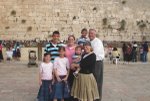
It is definitely a very emotionally powerful moment when one stands in the Kotel tunnels at the closest point I can get to the Kodesh Hakedoshim (especially since I am a Kohen). Actually seeing the damage done to the stone road when the overpass entrance to the Beit Hamikdosh was destroyed also provided a much more tangible sense of the destruction and loss.
However, I just wasn’t able to get into the mood of Tisha B’Av itself. We have so much happening in our lives right now. There is so much turmoil and transition that it has become increasingly difficult to focus.
We are living in a “vacation home”. While it is certainly comfortable, it isn’t our home, and it is tough to feel as if we are living real life while we are there. Especially when we realize that we are about to move again in about 2 weeks.
As an Oleh trying to deal with many different issues integrating into a new country with a totally new set of rules, our whole family’s experience has been overwhelmingly positive. I know that many others are suffering greatly from the war and in much more difficult ways than I ever will. But, the results of the war are beginning to take a toll on us as well.
Our container with all our stuff (clothes, furniture, appliances, beds, etc.) is still in Greece. We have heard that they are shuttling containers from Greece to Israel in smaller ships but that it is a mess. *Sigh*
We have definitely begun to see small signs of change due to the war more and more. Our initial “wake-up” was seeing the families that evacuated the North living in the Beit Shemesh schools.
Shabbat Chazon morning, I was sitting with my nephew Yitzie who had joined us on break from Mach Hach Ba’aretz and was commenting to him how the Mercazi Shul that we were davening in was having its second no speech week in a row (the prior week we were Mevarech Hachodesh and the Rav davened for the Amud so he didn’t speak) since the Rav seemed to be absent. My friend Moshe Teren who is a Gabbai in the shul walked over to me that moment and said, “Here’s something you don’t see in the States.”
“What?” I replied.
“The Rav not being in shul because he was called up to serve as Rav for Chayalim at the Lebanese border that are entering combat.”
It was certainly eye opening. He had been called the prior Sunday (for a 7-10 day period) not to fight, but to act in his capacity as Rav for those Chayalim (soldiers) who needed minyanim, to ask about a halacha, to make a psak or just counsel those young men and women at the front lines who were about to enter or were just returning from the active war zone. That certainly IS something you would not see in the States.
On Sunday I took the train to Yerushalayim with my nephew. The Train station is a 5 minute walk from Teddy Stadium where the Mach Hach campers were to assemble and go to their busses for the rest of their tour. It is also a 10 minute bus ride from the Yeshiva, so I am on the train often.
The train left almost 25 minutes late and seemed much more crowded than usual. Initially, I didn’t attribute it to anything specific, but when we got off the train there were literally hundreds of Chayalim exiting the train. Apparently, the reserve call up of 30,000 troops had a major muster point at Teddy Stadium that morning and they were all coming to report for duty and transportation to their training bases.
The rest of the week I noticed other things that would normally not have caught my eye, but I am beginning to notice. For instance, security on the buses. I know that there are officers who randomly board the buses and check for suspicious items for security purposes. They board the bus at one stop, do a quick walk through of the bus and then stand by the driver for 5-10 stops before getting off and moving to another bus.
Yet there was a couple of days in the last 2 weeks that it seemed there were security people everywhere. Every bus had one and they rode the bus for long stretches at a time.
Also, there are certain days when my laptop bag gets a cursory glance from security guards before they wave me into the train station or restaurant or mall that I am going to. But on Erev Tisha B’av every guard was extremely attentive to going through the entire bag, and the guard by the central bus station even made me turn on the laptop to make sure that it was really a working computer!
I am sure that they had and will always have certain times where they have an advisory that something “may” take place or that they know of a threat directed at a specific target. I am sure that they also have days were they tighten security as a drill in order to maintain their watchfulness. However, I probably noticed it more because of the heightened sensitivities in the state of war.
Last week our Yeshiva’s summer program concluded. The South African and Australian students are now with their parent program and will leave on a tour of Poland next week. My boss Rav Benny Pflanzer went to Miluim before we even had a chance to sit together for a moment, so the Rosh Yeshiva, Rav Yehuda Susman and I had to take more active roles in preparing the building for the new zman than we had expected.
Our Yeshiva is growing from 45 to 75 (85 in January) talmidim, causing a need for an expanded Beit Midrash as well as dormitories, classrooms and dining facilities. We occupy a cnverted (by us) apartment building, so we are in the midst of a major renovation that was set into motion by Rav Benny and trying to make sure that everything is done functionally without costing a fortune.
On Sunday I tried to call my sister in Tel Hashomer and couldn’t get through to her. I finally reached her on the cell to hear that she had gone to Haifa and Naharia to visit a sister in law who was on her deathbed as well as her husband’s extended family that live in the North.
I was amazed that she would make such a trip. After all, rockets had been pouring down on the area without pause and it seemed foolhardy to go there. However, this sister in law was quite ill, and my sister wanted to visit her. Unfortunately, the woman passed away on Monday morning and my sister was extremely grateful that she had made the trip.
On Tuesday, Goldie came to Yerushalayim with Zippy (pronounced Tzippy) Lieberman so that we could all go to the Misrad Harishui (licensing authority) to apply for Israeli drivers licenses. Their offices are located a ten minute walk from the Yeshiva in Talpiot.
The process of getting a drivers license is quite unusual compared to what we are used to. In America, everything but the actual driving lessons (if needed) is done at the DMV. Eye exam, testing, payments, anything related to getting the license is handled by them.
In Israel, getting the license is a multi stage process involving many different organizations. First is getting the initial application into the system and taking your picture. This can be conveniently be done at the Malcha Mall (next to the Yerushalayim train station) in an optical shop. Why is it convenient? So that you can take the form to the back of the store for your 40 shekel ($9) eye exam, administered by one of the opticians in the store.
After the eye exam, you need to take a trip to the doctor so that he can give you a medical exam and pronounce you fit for driving. This normally costs 70 shekel, but both Goldie and I set up medical appointments for other things when we went and just had the doctor fill out the forms while we were already there.
After the doctor approves you, you need to take your 1) US drivers license, 2) Aliyah Certificate, 3) Citizenship papers and 4) the drivers license application and vision/medical form to the licensing authority offices. Once they process the paperwork, you need to go for a driving lesson before you take the road test (paying the road test fee of course at the – you guessed it – POST OFFICE!?!).
We got to the licensing offices at 11:30 or so on a nice hot day and proceeded to wait in line at the information counter, just like we would at the DMV. After 10 minutes (and 2 guys cutting the line) it was our turn at the desk and we proudly presented our papers. The lady glanced at them and said (in Hebrew), “Can’t you read? You need to go to the windows inside!”
Well, in all honesty I am pretty sure that I can read. What I read was a sign in English that said: To all New Olim and Tourists, For the getting of a Driving Certificate you must present a Foreign License, a Teudat Oleh, a Teudat Zehut and the Vision and Medical Approval Forms. That was it. There was nothing else on the sign about going to the interior room to present the papers, so we assumed we were in the right place.
Apparently, one of the Hebrew signs clearly states “Drivers Licenses proceed inside and take a number.” Since I have no idea how to say drivers license in Hebrew, I didn’t realize that I was in the wrong line. It was only 10 minutes anyway.
When we went to the interior room we had to take a number from one of those plastic dispensers they have in the bakery. The room had about 8 windows to transact business with 3 clerks serving the people. When they would complete a transaction, each clerk had a button to advance the counter to the next number.
We had numbers 188, 189 and 190. When we took the numbers, they were currently serving number 129, and we got nervous. With 3 people working it would take at least an hour to get to our turn in line, if not more. Goldie wanted to go get an iced coffee for the wait, and it was a good thing she didn’t because we got to enjoy a real slice of the Israeli mentality while we waited and she would have also missed out turn in line.
Apparently, Israelis are not the most patient of people, and they hate waiting. As we watched, there must have been at least 30 people who walked into the room, took a number and left the room in disgust when they saw how huge the gap was to get to them.
At the same time, the clerks would sometimes go through 6 or more numbers to get to the next customer since so many people had already left.
These clerks do this every day, and it is no doubt very irritating to them that people constantly take numbers and then leave. So they fight back a little.
In America, there is a pause of 2 or 3 seconds between the clerk calling out one number and moving on to the next. 145…..(pause), 146……(pause), 147….., until the next person in line is served.
One of the clerks would go through the numbers in that manner. However, the 2 others would make one pause after the first number and then ding*ding*ding*ding* keep revolving the number until somebody would come up to their window. 145…..(pause), 146, 147, 148, 149 – non stop.
Well, unless you were paying close attention, the number machine would just zip right by your number. It was comical watching all the people suddenly jump up and frantically leap over the seats in order to keep their turn.
Of course, if there was someone approaching the window, the clerks would stop pushing the number button and serve the next person. There was one guy who approached the window while the numbers were frantically revolving. The clerk stopped moving the numbers and he paused. She called out to him (all of this was in Hebrew), “Why did you stop?” His answer? “Why did YOU stop, I am in 6 more numbers and I was getting ready!”
After a very quick and entertaining 15 minute break our number was up. As the clerk was processing our paperwork, she got a very important call on her personal and paused what she was doing for 3 or 4 minutes while she took the call.
How did I know it was an important call? Well, to an Israeli ALL personal calls are important and must be dealt with immediately, no matter what you are doing. Bank tellers, postal clerks, even the guy in the falafel store, all drop everything in order to take their personal calls.
On Erev Tisha B’av I had originally planned to be Menachem Avel for my sister’s in. However, I needed to be in the Yeshiva for a meeting, and the travel time made the trip to Haifa impractical that day. Since Friday would be spent entertaining all the kids and preparing for Shabbat, Sat. night would be too late and the Shiva ended on Sunday, I had no choice but to go to Haifa on Thursday, Tisha B’Av in the afternoon.
So, after a morning spent saying Kinot in one of the local shuls, I got a ride to the train station and took the train to Tel Aviv where I met my brother in law and nephew for a ride to Haifa.
My nephew just got his driver’s license. Interestingly, when a teenager gets their license for the first time (having passed written and driving exams), he cannot drive on his own for the first 3 months. All new drivers must be accompanied by an adult. This trip was a perfect time for him to get in a few hours of driving experience.
The drive up was uneventful. I expected to see rocket damage or empty streets. While the streets were certainly not filled with traffic/people, there were certainly many people out and about.
I remarked to my brother in law during the drive that there were many rockets that landed in the North the day before, and that we had to be alert. We discussed it at the shiva house as well, and they all commented that thankfully Tisha B’Av had been quiet.
There is a 1 connection train from Haifa to Beit Shemesh, and I wanted to get home, so at about 4 PM I headed out the door for a ride to the train station. Just as I reached the street, the air raid sirens sounded.
We quickly rushed into the house and stood by interior walls away from the windows. After a minute or two, the people on the Mirpeset (outdoor porch) reported that they had heard 4 booms. Since the event appeared to be over, we headed out the door again.
One of my sister’s relatives volunteered to drive and we headed off. In the middle of the ride, the sirens sounded again and we looked for some cover. The one thing they tell people is definitely NOT to stay inside a car during an event, so we looked for somewhere to stop and essentially hide.
The driver noticed that there was a tunnel underpass beneath the train tracks, so he quickly drove there for the protective cover. When we got there, we found 4 other cars had the same thought and we all waited there for a few uneventful minutes before we resumed the trip.
Although it was a little frightening to experience the warnings, I would say that the uncertainty of not knowing if there is a Katyusha about to land near you that is the worst part. It is such a random event, and the danger is not as bad as the anticipation.
The rest of my trip was uneventful, and I am on my way back to Beit Shemesh for the conclusion of the fast.
I just happened to glance out the train window and noticed what is clearly a military helicopter parked in a field off to the side. As we continued down the tracks and more helicopters and other equipment became visible, I realized that we were passing some type of military installation. Then I noticed a series of tents and other temporary structures and it dawned on me that this was not a regular base, but must be a temporary base/staging area for use during the current fighting.
It is astounding how quickly the country mobilized and the reservists all headed for where they needed to be. Although there is a lot of press coverage about the destruction in Lebanon and some coverage of the Israeli losses as well, within Israel there does not seem to be a panic about the dangers we face.
I know I say this often, but although it is certainly getting easier to notice, outside of Northern Israel the only real signs of war that we have are the missing reservists who have gone to fight, and the thousands of evacuees who have fled the constant shelling of their homes, taking up residence in schools, homes, hotels and just about anywhere that people can host them.
Although it is now several hours after the tzom and I had not intended to add more to this edition, I feel obliged to add a minor postscript of major significance. Upon my arrival home, I told Goldie about the 2 sets of warning sirens we had heard in Haifa. She told me that there had indeed been shelling at that time – not far from Haifa and that rockets had hit Acco, killing 4 people.
Very scary.
Thursday, August 17, 2006

Wednesday, August 09, 2006
‘Greece’ is the Word (Article #14) 8/3/2006
Our third Shabbos (Shabbat? even I get confused) passed uneventfully. After our Friday night seudah at home, we enjoyed a terrific meal with our buddy family the Schneiders for lunch. We had a really nice time there and since Amy bakes professionally out of her home, a really awesome dessert!
Our kids have really acclimated well to the community. They have had sleepovers and playdates and have really become a part of the children’s “scene” in our part of Ramat Beit Shemesh. Each Shabbat they disappear for hours and it is a pleasure to experience.
On Sunday we had a major meeting at work about the scheduled tiyul to Gilboa the next day. With all the hostilities going on and the rockets falling, we decided that it was not prudent to send the boys up north and replaced the tiyul with a trip to Ir David and the Kotel excavations.
Since we needed to send someone from the administration on the trip and it has been 24 years since I last visited Ir David and Chizkiyahu’s tunnels, I volunteered to go on the tiyul. It would give me a chance to get to know the South African and Australian students (who will be with us through December) and experience some of Yerushalayim.
Aliza (age 10) had no camp that week until Wednesday, so we decided to have her join me on the tiyul. Chaya (13) also wanted to go, but she had to go sit for a high school placement exam instead. She will have to join me at another time.
Thankfully we got a ride Monday morning to Yerushalayim. Transportation has become a major issue for us. We have been getting around locally by foot or taxi. We cannot buy a new tax exempt car until we get Israeli drivers licenses. Renting a car can cost $1,000 or more a month. So we are trying to get a used car that we can keep for a year or two and then buy a new car.
However, with 8 people in the family our choices are limited to 3 types of minivans. Unfortunately these minivans are not only expensive, they are also in limited supply and it is hard to find one. Even worse is the fact that they are incredibly expensive. One car dealer offered me a 14 year old minivan for the low low price of $15,000.
So we are looking around to try and find something a little cheaper and in the meantime are resorting to taxis. At least for local trips.
Getting to work in the morning is a different story. While the train lets me off a ten minute bus ride from the office, it is a $7 taxi ride to get to the train each way. Since this can really add up, I have started to take the bus into Yerushalayim (which leaves 3 blocks from our house), and connect from there to a bus to my office. The trip ends up taking about 15 minutes more, but it is more direct with only one transfer involved.
I wouldn’t care normally, but I simply hate the bus. The train is so comfortable and spacious while the bus is always crowded and with all the curves and turns I am always slightly queasy by the time I get off.
When we get a car, Goldie will be able to not only do all her shopping and errands conveniently; she can also drop me off at the train which is a short 10 minute ride away.
Luckily, that morning we were able to catch a ride to the Yerushalayim end of the train trip and catch a bus to the Yeshiva to go on the tiyul.
What can I say about Ir David? It was amazing! Our first stop was a park in Talpiyot where we had a bird’s eye view of most of Yerushalayim and the Old City. Our guide Yaron Levy was very informative about showing us different areas and how they are represented in Tanach.
We then hopped back on our bus for a short ride to the Ir David excavations in East Jerusalem. Ir David is the site where archeologists believe that David Hamelech set up his castle. It is downhill from Har Habayit and currently right in the middle of an Arab area.
We saw the excavations and the location where they have found several sealing stamps with names on them that were people mentioned in Tanach. We also had a great view of Har Hazaisim and talked about the coronation of Shlomo Hamelech with specific views of exactly where the events most likely occurred.
The highlight of the day though, was the trip through the water tunnel. This tunnel had been dug originally as a water source for the original residents of Yerushalayim from the springs which were the main water source for the area. This spring was located outside the walls of the city, and the tunnel diverted some of its water to a pool within the city walls.
However, Chizkiyahu expanded the tunnel and sealed the spring so that the Syrian army would not be able to have a water source upon its return to Yerushalayim. Originally discovered many years ago, it was not until the late 90’s that new excavations discovered totally unknown areas of the water tunnel and surrounding city, dramatically expanding our understanding of city life in Biblical times.
With the exception of the blinding light provided by camera flashes and very rare flashes of light from Yaron’s mini flashlight, we walked the entire tunnel in total dark. For those who have not walked the tunnel, the water continues to flow through it, and at times it gets very narrow and short (at one point I was totally bent over as I walked and felt the ceiling of the cave scratch my back).
The footing is all uneven and totally underwater, and since the walls are not always even, we had to walk through very carefully. After a while the boys began to sing different songs as we made our way and it was a lot of fun. When we finished we discussed what a marvel of engineering it must have been to dig the tunnel totally underground.
Although the tunnel was cool and wet inside, by the time we got out we were totally exhausted and walking up the hill to the old city was grueling. After a break for lunch we made our own minyan for mincha at the Kotel and headed to the last part of our tiyul, a tour through the southern corner of the Kotel.
Seeing the destruction of the Beit Hamikdosh is especially meaningful during the 3 weeks. However, seeing visible signs of damage in the excavations was an especially poignant moment.
I had no idea that the protrusions from the Kotel at its’ southern end were the remnants of a bridge entrance into the Har Habayis. In the excavations we were able to see where the weight of the falling bridge stones literally broke the street below and where the stones from the upper levels of the wall were thrown.
Standing among the ruins of the Beit Hamikdosh during the 3 weeks somehow brings the meaning of what we are missing a little more home. I hope that it somehow makes my davening a little more meaningful with a greater understanding of what we have lost.
We cut the tiyul short because it was a really hot day and we were all exhausted from walking.
Thankfully, the next few days were uneventful for us. Chaya had a recurrence of Strep Throat (the Doctor told us that if she is prone to strep it will happen more in Israel than America) and the kids all went to camp and had a great time. By Thursday it was clearly time for something to happen to liven things up.
That morning started off on the wrong foot when Goldie took a taxi to the center of town to go shopping at one of the supermarkets only to discover that the market doesn’t open until 11:00. Apparently, most of the shoppers for that market are the husbands who shop late at night after work/kollel, so the hours are skewed for their benefit.
Later that day I took a half hour walk to the offices of our shipping agent to drop off some documents that had not come through clearly in a fax. I was greeted at the door with the words, “your container is now in Greece”.
Apparently, the ship with our container makes several stops in its roundabout journeys. It therefore always has numerous containers on board, each destined for different places. So the amount of containers on board actually being delivered to Israel may only be ten to fifteen percent of the total cargo.
With the start of hostilities in the North and the subsequent bombing of Haifa and Northern Israel, the port of Haifa has been closed with all shipments being made to Ashdod, a much smaller port. Furthermore, the insurance companies have been charging the shipping lines a surcharge for each container on board the ship that enters Israeli waters, regardless of the container’s final destination.
Since the shipping lines a) don’t want to pay an insurance surcharge for the containers onboard NOT destined for Israel and b) don’t want a full boat to be waiting up to two weeks to be unloaded in Ashdod, they chose to drop our container in Greece instead. They are within their rights to do so, since they have only undertaken to get our container as close to Israel as they can.
With this drop in Greece we get added fees. Fees for unloading the container into Greece and fees for loading it back onto a vessel to Israel. Plus storage fees. Since we do not know how long our stuff will be in Greece, we have no idea how much this is costing us.
Of course there is also the fact that we have none of our things and need to move into a different house in less than 3 weeks. Without beds, linens, pots, pans, anything that we packed in the lift. School starts in a month and we have no school clothes. The list of inconveniences this causes is endless.
At the current time, we have no idea how long this will last, and can only hope that everything works out quickly.
Of course, when I told Goldie about it she was beside herself. Anger and tears mixed together as she realized that all our planning to be settled in and ready for school early were not going to come through and that there was no way to “fix” it.
While it helps to know that most of the current crop of Olim face similar issues, it doesn’t make it any easier on us. We are frustrated and concerned that we will face problems when school starts because the kids will not be prepared. We are also worried about dealing with unpacking when all the kids are in school and cannot help.
Then there is the endless supply of people who say to us, “well it could be worse, after all the people in the North are being shelled every day.” While I admit that we definitely have it much better than them, it is really no comfort because it is hard to internalize. Or at least it was until that night.
I have written about the war and how we do not really feel the effect of it here in central Israel. Thursday night, we went to a meeting about a Gan Chova for Mordechai being held in a Ramat Beit Shemesh school. When we got to the building we walked in to discover that over 100 people had been living in the building since the start of hostilities.
Apparently, throughout the entire Beit Shemesh community, evacuees from the north numbering 500 or more are living in classroom and gymnasiums, with all their food, clothing, beds, formula, and whatever else they may need being provided to them by the local Gemillas Chessed committee.
I got an email from a Five Town friend telling about how families are printing ads in the paper and offering their phone number through the radio offering to welcome complete strangers and their families into their homes.
Seeing these people and realizing that they had to leave their homes because of such strong threats to their safety finally brought home how significantly Israel has been affected by the war. We have faith that our army (if allowed to) can truly wipe out the terror threat, and allow these people to return to their homes and join the many thousands who either chose to stay behind or had nowhere to go.
These people are truly paying the hardest price of all of us. Their neighbors have died in rocket attacks, their homes destroyed and their security endangered while we wage this war. We can only pray that the danger to them is quickly eradicated and that they can return to a normal life.
On Friday, my boss returned to Israel from a two week trip to America. I was looking forward to his being back in the office, since I have only been on the job for three weeks and I need his guidance on a lot of issues. I called him Friday morning to welcome him back to the country and his response was to tell me that he had been called up to the reserves and would be reporting for duty within 2 days.
He is a member of the paratroopers and if anything serious is going to happen, he will be right in the thick of things. While it will be hard for us in Yeshiva (considering that we are in the midst of a major building renovation – making room for the 60% student growth we will have this coming year), I feel terrible for his wife and family.
He spent 2 weeks traveling away from home and they had no vacation/family time since the Yeshiva had been in session. These next few weeks were I am sure a time that they had planned to spend time together as a family. Now they are a time that they will spend worrying about their husband and father.
In all, 3 members of our staff were called to duty last week. We also have a neighbor who was called as well. Hopefully they will not have to see action and if they do, we hope and pray that Hashem keep them and all our Chayalim safe.
Goldie’s nephew who is here in Mach Hach Baaretz came to us for Shabbos. This was our first completely at home Shabbos and we were looking forward to it. Although some of the Mach Hach busses had been evacuated from Northern Israel, the program continued to run and the kids have been having a great time.
This is in contrast to several programs that either curtailed their sessions and sent kids home or cancelled their program altogether. While I can understand the concern for the kids safety, with the exception of Northern Israel, we really live in a safe and secure environment.
If there ever was a time that tourism and your visits to Israel was important, it is now! Our economy is taking a double hit, both by the unforecasted military expenses, but also by the lost tourism revenue, a major source of income for the country.
Every tourist that cancels a trip, every child that doesn’t attend a summer program or postpones their Yeshiva study in Israel and every parent that doesn’t come to visit that child causes a direct loss to the Israeli economy, at a time when we can least afford it.
Please continue to come. You are still safe in Yerushalayim, still safe in Tel Aviv, you can still visit Chevron and Masada. We need you to do so, and we need you to encourage others to do so. Now is the time when we need your presence and your support so that together we can ensure the viability and continuity of our country.
Our kids have really acclimated well to the community. They have had sleepovers and playdates and have really become a part of the children’s “scene” in our part of Ramat Beit Shemesh. Each Shabbat they disappear for hours and it is a pleasure to experience.
On Sunday we had a major meeting at work about the scheduled tiyul to Gilboa the next day. With all the hostilities going on and the rockets falling, we decided that it was not prudent to send the boys up north and replaced the tiyul with a trip to Ir David and the Kotel excavations.
Since we needed to send someone from the administration on the trip and it has been 24 years since I last visited Ir David and Chizkiyahu’s tunnels, I volunteered to go on the tiyul. It would give me a chance to get to know the South African and Australian students (who will be with us through December) and experience some of Yerushalayim.
Aliza (age 10) had no camp that week until Wednesday, so we decided to have her join me on the tiyul. Chaya (13) also wanted to go, but she had to go sit for a high school placement exam instead. She will have to join me at another time.
Thankfully we got a ride Monday morning to Yerushalayim. Transportation has become a major issue for us. We have been getting around locally by foot or taxi. We cannot buy a new tax exempt car until we get Israeli drivers licenses. Renting a car can cost $1,000 or more a month. So we are trying to get a used car that we can keep for a year or two and then buy a new car.
However, with 8 people in the family our choices are limited to 3 types of minivans. Unfortunately these minivans are not only expensive, they are also in limited supply and it is hard to find one. Even worse is the fact that they are incredibly expensive. One car dealer offered me a 14 year old minivan for the low low price of $15,000.
So we are looking around to try and find something a little cheaper and in the meantime are resorting to taxis. At least for local trips.
Getting to work in the morning is a different story. While the train lets me off a ten minute bus ride from the office, it is a $7 taxi ride to get to the train each way. Since this can really add up, I have started to take the bus into Yerushalayim (which leaves 3 blocks from our house), and connect from there to a bus to my office. The trip ends up taking about 15 minutes more, but it is more direct with only one transfer involved.
I wouldn’t care normally, but I simply hate the bus. The train is so comfortable and spacious while the bus is always crowded and with all the curves and turns I am always slightly queasy by the time I get off.
When we get a car, Goldie will be able to not only do all her shopping and errands conveniently; she can also drop me off at the train which is a short 10 minute ride away.
Luckily, that morning we were able to catch a ride to the Yerushalayim end of the train trip and catch a bus to the Yeshiva to go on the tiyul.
What can I say about Ir David? It was amazing! Our first stop was a park in Talpiyot where we had a bird’s eye view of most of Yerushalayim and the Old City. Our guide Yaron Levy was very informative about showing us different areas and how they are represented in Tanach.
We then hopped back on our bus for a short ride to the Ir David excavations in East Jerusalem. Ir David is the site where archeologists believe that David Hamelech set up his castle. It is downhill from Har Habayit and currently right in the middle of an Arab area.
We saw the excavations and the location where they have found several sealing stamps with names on them that were people mentioned in Tanach. We also had a great view of Har Hazaisim and talked about the coronation of Shlomo Hamelech with specific views of exactly where the events most likely occurred.
The highlight of the day though, was the trip through the water tunnel. This tunnel had been dug originally as a water source for the original residents of Yerushalayim from the springs which were the main water source for the area. This spring was located outside the walls of the city, and the tunnel diverted some of its water to a pool within the city walls.
However, Chizkiyahu expanded the tunnel and sealed the spring so that the Syrian army would not be able to have a water source upon its return to Yerushalayim. Originally discovered many years ago, it was not until the late 90’s that new excavations discovered totally unknown areas of the water tunnel and surrounding city, dramatically expanding our understanding of city life in Biblical times.
With the exception of the blinding light provided by camera flashes and very rare flashes of light from Yaron’s mini flashlight, we walked the entire tunnel in total dark. For those who have not walked the tunnel, the water continues to flow through it, and at times it gets very narrow and short (at one point I was totally bent over as I walked and felt the ceiling of the cave scratch my back).
The footing is all uneven and totally underwater, and since the walls are not always even, we had to walk through very carefully. After a while the boys began to sing different songs as we made our way and it was a lot of fun. When we finished we discussed what a marvel of engineering it must have been to dig the tunnel totally underground.
Although the tunnel was cool and wet inside, by the time we got out we were totally exhausted and walking up the hill to the old city was grueling. After a break for lunch we made our own minyan for mincha at the Kotel and headed to the last part of our tiyul, a tour through the southern corner of the Kotel.
Seeing the destruction of the Beit Hamikdosh is especially meaningful during the 3 weeks. However, seeing visible signs of damage in the excavations was an especially poignant moment.
I had no idea that the protrusions from the Kotel at its’ southern end were the remnants of a bridge entrance into the Har Habayis. In the excavations we were able to see where the weight of the falling bridge stones literally broke the street below and where the stones from the upper levels of the wall were thrown.
Standing among the ruins of the Beit Hamikdosh during the 3 weeks somehow brings the meaning of what we are missing a little more home. I hope that it somehow makes my davening a little more meaningful with a greater understanding of what we have lost.
We cut the tiyul short because it was a really hot day and we were all exhausted from walking.
Thankfully, the next few days were uneventful for us. Chaya had a recurrence of Strep Throat (the Doctor told us that if she is prone to strep it will happen more in Israel than America) and the kids all went to camp and had a great time. By Thursday it was clearly time for something to happen to liven things up.
That morning started off on the wrong foot when Goldie took a taxi to the center of town to go shopping at one of the supermarkets only to discover that the market doesn’t open until 11:00. Apparently, most of the shoppers for that market are the husbands who shop late at night after work/kollel, so the hours are skewed for their benefit.
Later that day I took a half hour walk to the offices of our shipping agent to drop off some documents that had not come through clearly in a fax. I was greeted at the door with the words, “your container is now in Greece”.
Apparently, the ship with our container makes several stops in its roundabout journeys. It therefore always has numerous containers on board, each destined for different places. So the amount of containers on board actually being delivered to Israel may only be ten to fifteen percent of the total cargo.
With the start of hostilities in the North and the subsequent bombing of Haifa and Northern Israel, the port of Haifa has been closed with all shipments being made to Ashdod, a much smaller port. Furthermore, the insurance companies have been charging the shipping lines a surcharge for each container on board the ship that enters Israeli waters, regardless of the container’s final destination.
Since the shipping lines a) don’t want to pay an insurance surcharge for the containers onboard NOT destined for Israel and b) don’t want a full boat to be waiting up to two weeks to be unloaded in Ashdod, they chose to drop our container in Greece instead. They are within their rights to do so, since they have only undertaken to get our container as close to Israel as they can.
With this drop in Greece we get added fees. Fees for unloading the container into Greece and fees for loading it back onto a vessel to Israel. Plus storage fees. Since we do not know how long our stuff will be in Greece, we have no idea how much this is costing us.
Of course there is also the fact that we have none of our things and need to move into a different house in less than 3 weeks. Without beds, linens, pots, pans, anything that we packed in the lift. School starts in a month and we have no school clothes. The list of inconveniences this causes is endless.
At the current time, we have no idea how long this will last, and can only hope that everything works out quickly.
Of course, when I told Goldie about it she was beside herself. Anger and tears mixed together as she realized that all our planning to be settled in and ready for school early were not going to come through and that there was no way to “fix” it.
While it helps to know that most of the current crop of Olim face similar issues, it doesn’t make it any easier on us. We are frustrated and concerned that we will face problems when school starts because the kids will not be prepared. We are also worried about dealing with unpacking when all the kids are in school and cannot help.
Then there is the endless supply of people who say to us, “well it could be worse, after all the people in the North are being shelled every day.” While I admit that we definitely have it much better than them, it is really no comfort because it is hard to internalize. Or at least it was until that night.
I have written about the war and how we do not really feel the effect of it here in central Israel. Thursday night, we went to a meeting about a Gan Chova for Mordechai being held in a Ramat Beit Shemesh school. When we got to the building we walked in to discover that over 100 people had been living in the building since the start of hostilities.
Apparently, throughout the entire Beit Shemesh community, evacuees from the north numbering 500 or more are living in classroom and gymnasiums, with all their food, clothing, beds, formula, and whatever else they may need being provided to them by the local Gemillas Chessed committee.
I got an email from a Five Town friend telling about how families are printing ads in the paper and offering their phone number through the radio offering to welcome complete strangers and their families into their homes.
Seeing these people and realizing that they had to leave their homes because of such strong threats to their safety finally brought home how significantly Israel has been affected by the war. We have faith that our army (if allowed to) can truly wipe out the terror threat, and allow these people to return to their homes and join the many thousands who either chose to stay behind or had nowhere to go.
These people are truly paying the hardest price of all of us. Their neighbors have died in rocket attacks, their homes destroyed and their security endangered while we wage this war. We can only pray that the danger to them is quickly eradicated and that they can return to a normal life.
On Friday, my boss returned to Israel from a two week trip to America. I was looking forward to his being back in the office, since I have only been on the job for three weeks and I need his guidance on a lot of issues. I called him Friday morning to welcome him back to the country and his response was to tell me that he had been called up to the reserves and would be reporting for duty within 2 days.
He is a member of the paratroopers and if anything serious is going to happen, he will be right in the thick of things. While it will be hard for us in Yeshiva (considering that we are in the midst of a major building renovation – making room for the 60% student growth we will have this coming year), I feel terrible for his wife and family.
He spent 2 weeks traveling away from home and they had no vacation/family time since the Yeshiva had been in session. These next few weeks were I am sure a time that they had planned to spend time together as a family. Now they are a time that they will spend worrying about their husband and father.
In all, 3 members of our staff were called to duty last week. We also have a neighbor who was called as well. Hopefully they will not have to see action and if they do, we hope and pray that Hashem keep them and all our Chayalim safe.
Goldie’s nephew who is here in Mach Hach Baaretz came to us for Shabbos. This was our first completely at home Shabbos and we were looking forward to it. Although some of the Mach Hach busses had been evacuated from Northern Israel, the program continued to run and the kids have been having a great time.
This is in contrast to several programs that either curtailed their sessions and sent kids home or cancelled their program altogether. While I can understand the concern for the kids safety, with the exception of Northern Israel, we really live in a safe and secure environment.
If there ever was a time that tourism and your visits to Israel was important, it is now! Our economy is taking a double hit, both by the unforecasted military expenses, but also by the lost tourism revenue, a major source of income for the country.
Every tourist that cancels a trip, every child that doesn’t attend a summer program or postpones their Yeshiva study in Israel and every parent that doesn’t come to visit that child causes a direct loss to the Israeli economy, at a time when we can least afford it.
Please continue to come. You are still safe in Yerushalayim, still safe in Tel Aviv, you can still visit Chevron and Masada. We need you to do so, and we need you to encourage others to do so. Now is the time when we need your presence and your support so that together we can ensure the viability and continuity of our country.
Wednesday, August 02, 2006
Citizens? Tourists? A little bit of both! (Article #13) 7/27/2006
One week following our Aliyah, Goldie’s brother David joined us for a six day visit. Arriving on Shiv’a Assur B’Tamuz, he came straight to our (temporary) home just in time to break his fast with us. Of course, since he had been traveling against the sun, his whole fast lasted only six hours!
Since I work a five day week, Sunday through Thursday, we had made plans to go to Chevron and get a private tour of the city and the Meorat Hamachpela. We were at that time just a few days into the Lebanon “hostilities”, and we were initially concerned about traveling into such a hot zone, even though we had arranged to travel via armored car. One of our neighbors reassured us by mentioning that if there was ever a time that the army was on high alert to watch out for us, this was the time.
We headed off with the kids and slowly wound our way through the beautiful hills of Yehuda. It was truly amazing to see the wide open areas and realize that if only we had the strength of conviction, that we could settle hundreds of thousands of our people in this literally empty area.
In Chevron, Simcha Hochbaum, an Oleh from the Lower East Side many years ago, took us through various neighborhoods of Chevron, showing us the original Beit Hadassah building and the caravans where the first Chevron returnees had lived, a special Beit Knesset with a 500+ year old torah, a cheder where children from around the region learn every single day of the year with the exception of Tisha B’av and finally the Meorah itself.
Unfortunately for him, we travel with a variety of kids, and the preschoolers just didn’t get into the tour, making it difficult for him to engage the rest of us. They would have played at every playground and park we passed, instead of hear another story about who did what and where. Things were further complicated when Mordechai, our five year old, heard that he and I (as Kohanim) were staying outside.
My father is mentally berating me as he reads this, since there are many authorities to rely upon that allow Kohanim to enter the building that covers the cave of Meorat Hamachpela. However, our Rosh Yeshiva at Eretz Hatzvi, Rav Yehuda Susman who is himself a Kohen made a very good point to me. Avoiding a burial ground is a D’Oraisah obligation (from the Torah), while praying at the grave of a Tzaddik is a D’rabonan at best (Rabbinically ordained). Do I want to risk potentially transgressing a violation of the Torah in order to get the zchus of davening inside the building?
Mordechai and I had the opportunity to discuss the reason he was being left behind, in between the various times he made me chase him down as he tried to get away from me and into the building. Now he walks around talking about how he is going to work in the Beit Hamikdosh with Abba, Chaim, Moshe……….and NOT HIS SISTERS!!!
While we waited for the rest of the family to rejoin us, we heard a series of loud bangs. Initially I was alarmed, but the soldiers didn’t even flinch, so I assumed that everything was OK. Later, I found out that it was the sound of fireworks being set off to celebrate the great “victory” their brothers had won over our forces by kidnapping two of our soldiers.
After we left Chevron, we set off for Kever Rachel in Beit Lechem. Unfortunately, the Kever “closes” on Fridays at 2 and we only arrived at 2:45, so we had to turn back and go home. Although my brother in law questioned our need to get a bulletproof vehicle for our trip, since we really did not even get a nasty glance, I must admit that we felt more comfortable having the vehicle.
The prior Friday night, as we walked to our hosts for the Seudah, I was stopped by a woman standing outside her home.
“Are you from Hewlett?” she asked.
“Close,” I replied, “I am from Woodmere – right next door.”
“I think I know you,” she said, “my name is Elisheva Shulman and my husband is Yossi.”
Of course, we have known the Shulman family since we moved to Woodmere eight years ago. Yossi’s parents lived five blocks from us and his brother and sister and their families all davened with us in the Young Israel of Hewlett.
The Shulman’s (of Ramat Beit Shemesh) made Aliyah last year, and that chance meeting resulted in a quick dinner invitation for the upcoming week. We really appreciated their invitation, the delicious meal and most importantly the conversation and advice – here was a family that had come from the same neighborhood we had and really could relate to where we were holding, and had the experience of a year behind them.
They had so much to tell us about how the kids really do adjust differently and reinforced our notion that you never can predict which kids will do what. They also reflected an attitude that we have seen a lot of here, basically not to sweat the small OR big stuff.
Things happen. Our house still is not ready and we need to move in soon because the people whose house we have been living in are coming home (more on this next week). Our shipping container filled with our belongings may end up in Cyprus or Greece because the companies cannot have their boats in port for two weeks in a war zone (next week also). We have no car, our internet outgoing line won’t be working till we move, we still own a home in the US, etcetera, etcetera, etcetera. My country is at war and its soldiers are being killed and kidnapped by terrorists.
Yet, they aren’t bombing Beit Shemesh. My kids are all fed. I have a job when many Olim do not. My family is (thankfully) healthy. My kids are mostly happy. So are their parents. I don’t have it bad really, and the things that are going wrong are more inconveniences than important stuff (well OK, war is more than an inconvenience and I really will be upset if our stuff gets sent to Greece or Cyprus).
The next morning we davened by the Merkazi shul in Ramat Beit Shemesh. The Merkazi shul is very Israeli. Even the Americans there have all been in Israel for many years and have really acclimated to Israeli society. It was a nice quiet davening with a very simple atmosphere. I really enjoyed it.
After shul, we went for the seudah to some old friends from Chicago, Moshe and Ronna Teren. Ironically, they hosted us for lunch when we were newlyweds and had just finished Sheva Brachos. We haven’t seen them in years, yet Moshe recognized me right away the previous Motzei Shabbat at Maariv and Ronna was quick to call with an invitation during the week.
Our kids really enjoyed meeting people who knew us way back when, and I have known them both since elementary school. I have noticed that each time we reconnect with an old friend here, the shared experience of Aliyah naturally makes for further common ground and renewed friendships. Also, people here are naturally inclined to be friendly and welcoming since they remember what it was like to be new olim. Imagine how much more so the feeling is when you already have a bond to the people.
Moshe is one of the Gabbaim of the Merkazi shul and their family has really acclimated to Israeli life. We got a totally different look at things from them since they had a much longer look down the road than anyone else we knew or had met and made Aliyah long before there was a Nefesh B’nefesh around to smooth the way.
On Shabbat afternoon some new friends who had made Aliyah on our flight, Donny and Tzippy Lieberman of Elizabeth, NJ stopped by with their kids for a visit. During the course of their visit we were discussing something about the paper and these articles when Donny suddenly exclaimed, “Wait a second! That is you?”
It seems his mother gets the 5 Towns Jewish Times in Brooklyn and has been reading them excerpts of different articles to compare notes with them. While each Oleh has their own story to tell, the Lieberman’s, like us, have not yet sold their house, were looking for a community where they could have a soft landing to acclimate and adjust in. However, Donny has to travel 3-5 weeks at a time for work and I cannot imagine how tough that will be on Tzippy.
On Sunday, I attended a conference at Beit Hatfutzoth for an organization called MASA. MASA did not exist when you or I attended Yeshiva/Seminary in Israel. It is a relatively new undertaking by a partnership of the Jewish Agency (the folks who try to promote Aliyah worldwide) and the State of Israel (I guess they do too).
MASA is dedicated to increasing the number of youths attending one year study/experience programs here in Israel. It does not affiliate itself with any one religious camp, it solely focuses on whether the program is and teaches a philosophy that is pro Zionism and the State of Israel.
MASA not only promotes these programs worldwide, but it also provides financial assistance to students who may otherwise not be able to afford to pay for this wonderful experience.
Of course, as any other agency, we mostly heard about what a wonderful job MASA does at the beginning of the program with advice for us coming at the end.
This conference was a wonderful way to network within the Yeshiva community as the total attendance was about 60% religious people. It also was a great time to meet some old friends.
At lunch, a Rabbi asked us if our table had an available seat and introduced himself as Rabbi Chaim Pollack of Michlalah. When I took a second look, I realized that he was my old Principal from Skokie Yeshiva and in fact, my graduating class was his last class before he made Aliyah with his family.
When I introduced myself, he amazed me by remembering that he had also taught both my older sister and one of my brothers. When I mentioned that he had also taught my wife Goldie in Michlalah, he said, “Goldie with the red hair?” whom he clearly remembered as well.
One of the treats of the conference was that I was able to take the train straight to Tel Aviv University’s campus. The train is really wonderful. While its benefits to Yerushalayim are still limited since it only travels as far as the Malcha mall, the central/north of the country can be reached very easily by the trains that leave Beit Shemesh.
This is no commuter train like we are used to in the USA. The cars are all carpeted and the seats are like airplane seats covered with fabric. Each section of four seats (two sets of two seats facing each other) has a table in their center, providing for a laptop, newspaper, sandwich or whatever you may need. I have found that I am able to work almost the entire ride, so my hour plus commute each way becomes work time.
On Monday, Batya (age 7) came home from camp having learned a new cheer. Of course, since the camp is conducted in Hebrew, the cheer was in Hebrew as well and Batya has no understanding of what she was saying. What we found fascinating was the way that she had already learned how to mimic the Israeli Raish (rrrrrrrrrrr) sound.
On Tuesday afternoon Goldie (and her brother) pulled the kids out of camp early so that we could meet in the old city and take a tour of the Kotel tunnel excavations. The last time I went on a Kotel excavation tour (1982), we toured a newly opened archeological dig at the southern corner of the Kotel immediately to the right of the Kotel plaza. This tour covered the area to the left of the Kotel plaza where moving northward. We were all fascinated to see the size of the original stones of the Beit Hamikdosh walls as well as the amazing stonemasonry and engineering that was used to put it together.
An especially moving moment was passing the one spot where the Kotel stands directly opposite the location of the Kodesh Hakedoshim. This is the closest spot that Jews can get to site of the holiest of holy places in our religion and we took a moment to stop and daven there. It was an emotionally moving moment, especially considering not only the current world climate, but the fact that we are in the three week period in which we heighten our mourning for the destruction of the Beit Hamikdosh.
On Wednesday, I got a frantic call from Chaya (age 13) that Eema cut her finger and cannot talk. After trying to calm Chaya down I got her to tell me that they had been making salad when Goldie accidentally cut the tip of her thumb which was bleeding profusely.
Goldie refused to go to the doctor or have any neighbor come and pick her up and insisted that I not rush home but that I should stop and pick her up a cellphone as I had planned. So I agreed.
Here is another maddening thing about Israel. The banking system is totally different. Take the ATM system. On Wednesday morning I went to a branch of our bank (Hapoalim) in Yerushalayim to take out money. The ATM machine informed me that if I withdrew the money from the machine I would be charged a 60 Agurot ($.14) processing fee.
That made no sense to me since I was a costumer of that bank, so I went inside to ask about it. I was told that it did indeed cost money to use the ATM. So I decided to use the teller instead. Guess what? To use the teller costs 4 Shekel ($.90). Then they told me that of course all bank fees are only charged to our account at the end of the month (???).
When I asked about these fees they told me I should simply use my debit card since there is no charge for using a debit card at all!
Credit cards are issued by banks based not on filling out a form, but by their long term relationship with each customer. Credit cards also work differently. Essentially, a credit card is just a different kind of debit card. All your purchases are charged to the card and at a specific time of the month the funds are automatically deducted from your bank account.
As a new Oleh without any kind of relationship with my bank I could not get a credit card so all I have is a debit card that I use to pay for as many things as I can since there is no charge to use it and taking out cash to pay for things would cost me money.
Then there are Tashlumin (installment payments). Buying a ream of paper at Office Depot on the credit card? The checkout person asks you how many monthly payments you want them to split your charge over. Groceries? Pay by installments. Of course, since I don’t have a credit card I cannot use tashlumin to pay for things and must pay up front.
I had tried to get a cellphone for Goldie (mine is provided by the Yeshiva) the week before. Since I didn’t have a payment card, they told me that I could not get a phone. When I returned with my debit card, I learned that without a credit card on which to make the installment payments for the purchase of the phone, I could not sign up for a cellphone without paying several hundred dollars for the purchase of the phone upfront.
Since we are trying to keep to a budget on our Shekel expenses against our income here, this was out of the question. So we ended up getting phones from Talk N’ Save, who were able to charge the costs to my American credit card.
Wednesday night, Goldie and I went to the emergency clinic of our Kupat Cholim in the very chareidi Ramat Beit Shemesh Bet neighborhood. This was my first exposure to the Israeli medical system and I was floored.
When we entered, the receptionist asked Goldie for her Israeli identity number, entered that into the computer and directed us to room number one to see the doctor. No forms, no triage, no anything. Just go see the doctor.
We get to the room and the doctor is sitting at his desk reading a book. He put down his book and took about fifteen seconds to decide that she needed stitches, so he led us to the nurses room (I don’t know why they call it that – we didn’t see any nurses the entire time we were there). He proceeded to clean, stitch and dress the wound and then we were done.
The total time for this was approximately 10 minutes from the time we walked in to the time we walked out. In America, we would still have been filling out forms, much less waiting to be seen by the doctor.
With her thumb stitched up, Goldie prepared for our third Shabbat here in Israel, but the first Friday night meal to be eaten at home. We were kind of tired of eating out so much and the kids especially complained about not having Eema’s food. So we decided to stay home and just have a quiet meal to ourselves.
This allowed us also to get to sleep early for a change and prepare for the coming day and week a little more refreshed.
*****************************
Mazal Tov to Robert and Jennifer Airley of Cedarhurst and to Zvi and Shari Gherman and their families upon their Aliyah last week with Nefesh B’nefesh!! May your Klitta be Neimah! (May your absorption be pleasant)
Since I work a five day week, Sunday through Thursday, we had made plans to go to Chevron and get a private tour of the city and the Meorat Hamachpela. We were at that time just a few days into the Lebanon “hostilities”, and we were initially concerned about traveling into such a hot zone, even though we had arranged to travel via armored car. One of our neighbors reassured us by mentioning that if there was ever a time that the army was on high alert to watch out for us, this was the time.
We headed off with the kids and slowly wound our way through the beautiful hills of Yehuda. It was truly amazing to see the wide open areas and realize that if only we had the strength of conviction, that we could settle hundreds of thousands of our people in this literally empty area.
In Chevron, Simcha Hochbaum, an Oleh from the Lower East Side many years ago, took us through various neighborhoods of Chevron, showing us the original Beit Hadassah building and the caravans where the first Chevron returnees had lived, a special Beit Knesset with a 500+ year old torah, a cheder where children from around the region learn every single day of the year with the exception of Tisha B’av and finally the Meorah itself.
Unfortunately for him, we travel with a variety of kids, and the preschoolers just didn’t get into the tour, making it difficult for him to engage the rest of us. They would have played at every playground and park we passed, instead of hear another story about who did what and where. Things were further complicated when Mordechai, our five year old, heard that he and I (as Kohanim) were staying outside.
My father is mentally berating me as he reads this, since there are many authorities to rely upon that allow Kohanim to enter the building that covers the cave of Meorat Hamachpela. However, our Rosh Yeshiva at Eretz Hatzvi, Rav Yehuda Susman who is himself a Kohen made a very good point to me. Avoiding a burial ground is a D’Oraisah obligation (from the Torah), while praying at the grave of a Tzaddik is a D’rabonan at best (Rabbinically ordained). Do I want to risk potentially transgressing a violation of the Torah in order to get the zchus of davening inside the building?
Mordechai and I had the opportunity to discuss the reason he was being left behind, in between the various times he made me chase him down as he tried to get away from me and into the building. Now he walks around talking about how he is going to work in the Beit Hamikdosh with Abba, Chaim, Moshe……….and NOT HIS SISTERS!!!
While we waited for the rest of the family to rejoin us, we heard a series of loud bangs. Initially I was alarmed, but the soldiers didn’t even flinch, so I assumed that everything was OK. Later, I found out that it was the sound of fireworks being set off to celebrate the great “victory” their brothers had won over our forces by kidnapping two of our soldiers.
After we left Chevron, we set off for Kever Rachel in Beit Lechem. Unfortunately, the Kever “closes” on Fridays at 2 and we only arrived at 2:45, so we had to turn back and go home. Although my brother in law questioned our need to get a bulletproof vehicle for our trip, since we really did not even get a nasty glance, I must admit that we felt more comfortable having the vehicle.
The prior Friday night, as we walked to our hosts for the Seudah, I was stopped by a woman standing outside her home.
“Are you from Hewlett?” she asked.
“Close,” I replied, “I am from Woodmere – right next door.”
“I think I know you,” she said, “my name is Elisheva Shulman and my husband is Yossi.”
Of course, we have known the Shulman family since we moved to Woodmere eight years ago. Yossi’s parents lived five blocks from us and his brother and sister and their families all davened with us in the Young Israel of Hewlett.
The Shulman’s (of Ramat Beit Shemesh) made Aliyah last year, and that chance meeting resulted in a quick dinner invitation for the upcoming week. We really appreciated their invitation, the delicious meal and most importantly the conversation and advice – here was a family that had come from the same neighborhood we had and really could relate to where we were holding, and had the experience of a year behind them.
They had so much to tell us about how the kids really do adjust differently and reinforced our notion that you never can predict which kids will do what. They also reflected an attitude that we have seen a lot of here, basically not to sweat the small OR big stuff.
Things happen. Our house still is not ready and we need to move in soon because the people whose house we have been living in are coming home (more on this next week). Our shipping container filled with our belongings may end up in Cyprus or Greece because the companies cannot have their boats in port for two weeks in a war zone (next week also). We have no car, our internet outgoing line won’t be working till we move, we still own a home in the US, etcetera, etcetera, etcetera. My country is at war and its soldiers are being killed and kidnapped by terrorists.
Yet, they aren’t bombing Beit Shemesh. My kids are all fed. I have a job when many Olim do not. My family is (thankfully) healthy. My kids are mostly happy. So are their parents. I don’t have it bad really, and the things that are going wrong are more inconveniences than important stuff (well OK, war is more than an inconvenience and I really will be upset if our stuff gets sent to Greece or Cyprus).
The next morning we davened by the Merkazi shul in Ramat Beit Shemesh. The Merkazi shul is very Israeli. Even the Americans there have all been in Israel for many years and have really acclimated to Israeli society. It was a nice quiet davening with a very simple atmosphere. I really enjoyed it.
After shul, we went for the seudah to some old friends from Chicago, Moshe and Ronna Teren. Ironically, they hosted us for lunch when we were newlyweds and had just finished Sheva Brachos. We haven’t seen them in years, yet Moshe recognized me right away the previous Motzei Shabbat at Maariv and Ronna was quick to call with an invitation during the week.
Our kids really enjoyed meeting people who knew us way back when, and I have known them both since elementary school. I have noticed that each time we reconnect with an old friend here, the shared experience of Aliyah naturally makes for further common ground and renewed friendships. Also, people here are naturally inclined to be friendly and welcoming since they remember what it was like to be new olim. Imagine how much more so the feeling is when you already have a bond to the people.
Moshe is one of the Gabbaim of the Merkazi shul and their family has really acclimated to Israeli life. We got a totally different look at things from them since they had a much longer look down the road than anyone else we knew or had met and made Aliyah long before there was a Nefesh B’nefesh around to smooth the way.
On Shabbat afternoon some new friends who had made Aliyah on our flight, Donny and Tzippy Lieberman of Elizabeth, NJ stopped by with their kids for a visit. During the course of their visit we were discussing something about the paper and these articles when Donny suddenly exclaimed, “Wait a second! That is you?”
It seems his mother gets the 5 Towns Jewish Times in Brooklyn and has been reading them excerpts of different articles to compare notes with them. While each Oleh has their own story to tell, the Lieberman’s, like us, have not yet sold their house, were looking for a community where they could have a soft landing to acclimate and adjust in. However, Donny has to travel 3-5 weeks at a time for work and I cannot imagine how tough that will be on Tzippy.
On Sunday, I attended a conference at Beit Hatfutzoth for an organization called MASA. MASA did not exist when you or I attended Yeshiva/Seminary in Israel. It is a relatively new undertaking by a partnership of the Jewish Agency (the folks who try to promote Aliyah worldwide) and the State of Israel (I guess they do too).
MASA is dedicated to increasing the number of youths attending one year study/experience programs here in Israel. It does not affiliate itself with any one religious camp, it solely focuses on whether the program is and teaches a philosophy that is pro Zionism and the State of Israel.
MASA not only promotes these programs worldwide, but it also provides financial assistance to students who may otherwise not be able to afford to pay for this wonderful experience.
Of course, as any other agency, we mostly heard about what a wonderful job MASA does at the beginning of the program with advice for us coming at the end.
This conference was a wonderful way to network within the Yeshiva community as the total attendance was about 60% religious people. It also was a great time to meet some old friends.
At lunch, a Rabbi asked us if our table had an available seat and introduced himself as Rabbi Chaim Pollack of Michlalah. When I took a second look, I realized that he was my old Principal from Skokie Yeshiva and in fact, my graduating class was his last class before he made Aliyah with his family.
When I introduced myself, he amazed me by remembering that he had also taught both my older sister and one of my brothers. When I mentioned that he had also taught my wife Goldie in Michlalah, he said, “Goldie with the red hair?” whom he clearly remembered as well.
One of the treats of the conference was that I was able to take the train straight to Tel Aviv University’s campus. The train is really wonderful. While its benefits to Yerushalayim are still limited since it only travels as far as the Malcha mall, the central/north of the country can be reached very easily by the trains that leave Beit Shemesh.
This is no commuter train like we are used to in the USA. The cars are all carpeted and the seats are like airplane seats covered with fabric. Each section of four seats (two sets of two seats facing each other) has a table in their center, providing for a laptop, newspaper, sandwich or whatever you may need. I have found that I am able to work almost the entire ride, so my hour plus commute each way becomes work time.
On Monday, Batya (age 7) came home from camp having learned a new cheer. Of course, since the camp is conducted in Hebrew, the cheer was in Hebrew as well and Batya has no understanding of what she was saying. What we found fascinating was the way that she had already learned how to mimic the Israeli Raish (rrrrrrrrrrr) sound.
On Tuesday afternoon Goldie (and her brother) pulled the kids out of camp early so that we could meet in the old city and take a tour of the Kotel tunnel excavations. The last time I went on a Kotel excavation tour (1982), we toured a newly opened archeological dig at the southern corner of the Kotel immediately to the right of the Kotel plaza. This tour covered the area to the left of the Kotel plaza where moving northward. We were all fascinated to see the size of the original stones of the Beit Hamikdosh walls as well as the amazing stonemasonry and engineering that was used to put it together.
An especially moving moment was passing the one spot where the Kotel stands directly opposite the location of the Kodesh Hakedoshim. This is the closest spot that Jews can get to site of the holiest of holy places in our religion and we took a moment to stop and daven there. It was an emotionally moving moment, especially considering not only the current world climate, but the fact that we are in the three week period in which we heighten our mourning for the destruction of the Beit Hamikdosh.
On Wednesday, I got a frantic call from Chaya (age 13) that Eema cut her finger and cannot talk. After trying to calm Chaya down I got her to tell me that they had been making salad when Goldie accidentally cut the tip of her thumb which was bleeding profusely.
Goldie refused to go to the doctor or have any neighbor come and pick her up and insisted that I not rush home but that I should stop and pick her up a cellphone as I had planned. So I agreed.
Here is another maddening thing about Israel. The banking system is totally different. Take the ATM system. On Wednesday morning I went to a branch of our bank (Hapoalim) in Yerushalayim to take out money. The ATM machine informed me that if I withdrew the money from the machine I would be charged a 60 Agurot ($.14) processing fee.
That made no sense to me since I was a costumer of that bank, so I went inside to ask about it. I was told that it did indeed cost money to use the ATM. So I decided to use the teller instead. Guess what? To use the teller costs 4 Shekel ($.90). Then they told me that of course all bank fees are only charged to our account at the end of the month (???).
When I asked about these fees they told me I should simply use my debit card since there is no charge for using a debit card at all!
Credit cards are issued by banks based not on filling out a form, but by their long term relationship with each customer. Credit cards also work differently. Essentially, a credit card is just a different kind of debit card. All your purchases are charged to the card and at a specific time of the month the funds are automatically deducted from your bank account.
As a new Oleh without any kind of relationship with my bank I could not get a credit card so all I have is a debit card that I use to pay for as many things as I can since there is no charge to use it and taking out cash to pay for things would cost me money.
Then there are Tashlumin (installment payments). Buying a ream of paper at Office Depot on the credit card? The checkout person asks you how many monthly payments you want them to split your charge over. Groceries? Pay by installments. Of course, since I don’t have a credit card I cannot use tashlumin to pay for things and must pay up front.
I had tried to get a cellphone for Goldie (mine is provided by the Yeshiva) the week before. Since I didn’t have a payment card, they told me that I could not get a phone. When I returned with my debit card, I learned that without a credit card on which to make the installment payments for the purchase of the phone, I could not sign up for a cellphone without paying several hundred dollars for the purchase of the phone upfront.
Since we are trying to keep to a budget on our Shekel expenses against our income here, this was out of the question. So we ended up getting phones from Talk N’ Save, who were able to charge the costs to my American credit card.
Wednesday night, Goldie and I went to the emergency clinic of our Kupat Cholim in the very chareidi Ramat Beit Shemesh Bet neighborhood. This was my first exposure to the Israeli medical system and I was floored.
When we entered, the receptionist asked Goldie for her Israeli identity number, entered that into the computer and directed us to room number one to see the doctor. No forms, no triage, no anything. Just go see the doctor.
We get to the room and the doctor is sitting at his desk reading a book. He put down his book and took about fifteen seconds to decide that she needed stitches, so he led us to the nurses room (I don’t know why they call it that – we didn’t see any nurses the entire time we were there). He proceeded to clean, stitch and dress the wound and then we were done.
The total time for this was approximately 10 minutes from the time we walked in to the time we walked out. In America, we would still have been filling out forms, much less waiting to be seen by the doctor.
With her thumb stitched up, Goldie prepared for our third Shabbat here in Israel, but the first Friday night meal to be eaten at home. We were kind of tired of eating out so much and the kids especially complained about not having Eema’s food. So we decided to stay home and just have a quiet meal to ourselves.
This allowed us also to get to sleep early for a change and prepare for the coming day and week a little more refreshed.
*****************************
Mazal Tov to Robert and Jennifer Airley of Cedarhurst and to Zvi and Shari Gherman and their families upon their Aliyah last week with Nefesh B’nefesh!! May your Klitta be Neimah! (May your absorption be pleasant)
Tuesday, July 25, 2006
Welcome to Israel? (Article #12) 7/20/2006
We awoke our first morning as Israeli citizens to the sound of the doorbell buzzing. Our 3 AM family party (jetlag) had morphed into a universal sleep late notice and the cleaning lady was at the door waiting to be let in.
The furnished home we are living in for the next few weeks comes complete with a cleaning lady three times a week (we pay) so that the house stays moderately in order. Although there couldn't have been much mess, it was a good thing she showed up, because without her we'd still be sleeping.
It was especially helpful because we had a 10 AM appointment to register for Kupat Cholim. Health coverage here is nationalized and automatically deducted from each employee's paycheck. However, in order to encourage the providers to provide the best care possible, there are several rival Kuppat Cholim organizations (similar to HMOs) that compete for patients and funds.
We were greeted at the airport by members of Kupat Cholim Meuchedet, whom we had already decided to join. Friday morning, one of them picked us up in her car and drove us to register for their specific organization. At the post office. Well, where else should you register for health coverage?
In Israel, EVERYTHING is done at the post office. Pay your bills? Go to the Post Office. Parking ticket? Post Office. Health Insurance? Post Office. I think you can even send mail from there.
Registering for health coverage cost about eight dollars. For the whole family. We were done within minutes and the local rep took out paperwork with her so she could enter us into the computer right away. Good thing she did because we were in their offices on Sunday.
After returning home we went to the shopping district in Ramat Beit Shemesh to convert some dollars into Shekels and pay for camp. We are paying something like $1,300 for camp. Two kids are going for five weeks and the other is going for two weeks.
Although we had been told to wait a few days so that our information could be entered into the national database, we decided to stop in at the bank and try to open a bank account. Israel maintains a national database of all citizens by their ID number. When they typed our numbers into the computer, all of our biographical information came up eliminating the need for filling out a million forms.
We headed to the local bagel store for lunch where we were presented by the owner with a lovely welcoming gift of treats when she heard that we were new olim and went home to prepare for our first Shabbat in Israel.
It is a good thing that the neighbors here are very friendly or we would have had a very hot Shabbat. Apparently, the thermostat has two settings. "On" and "off". If you program the timer, you must set it to be either on or off. You cannot change the temperature based on the time of day, you can only assign a single temperature and decide if you want the unit on or off.
Better yet, is the fact that the unit blows all the time. The condenser might turn itself on or off based on the desired temperature, but the fan motor is kept continuously blowing no matter if the condenser is making the air cooler or not.
Thankfully, there is a minyan on the block for Shabbat, so I was able to daven on time, even though setting the thermostat took me a long time. That is if there had been more than eight men. In the end, we had to run to a shul around the corner and show up late.
I should mention that we must have gotten 5 different cookie and cake trays welcoming us to the neighborhood on Friday, each more yummy looking than the next. This was beyond the numerous personal visits and calls from people offering to welcome us to the neighborhood.
That night we ate dinner by a cousin of mine who has lived in Israel for over 10 years and is about half a mile from us. The highlight of the evening was Mordechai's response (he is five) to a cousin who kept trying to speak to him in Hebrew. "I don't speak Hebrew," he replied, "I only just got here yesterday!"
After finally getting a good night's sleep, I headed off to shul and ended up at Bais Tefilla (not my intended destination). I felt like I was in the Red Shul or any other very American shul within the 5 Towns. Everything, including the announcements and Rabbi's speech was in English. There was a Bar Mitzva that day, and as a Cohen I got the first Aliyah to the Torah.
As the Gabbai recited the Mi Sheberach, I glanced at the Artscroll Gabbai Handbook and noticed that the Mi Sheberach I was getting had the title "Mi Sheberach for the Oleh"! While they meant Oleh to the Torah, I couldn't help but reflect that I was a double Oleh for that morning at least.
At the end of davening, both me and Rabbi Tzvi Friedman were welcomed as new olim and the entire shul sang Vshavu Vanim in our honor. After davening, it seemed like everyone in shul came over to welcome us to Israel.
When I retuned from shul to head off to lunch, I discovered that the jet lag had not yet totally run its course as the entire family had slept in until 11:20, ten minutes prior to my arrival home.
We ate lunch that day by our next door neighbors. Simon and Aliza Baum moved to Israel from London, where Simon continues to work three and a half days a week. Although they did not know us at all, they were quite happy to invite all seven of us for the meal, in addition to their other two guests whose families were overseas.
Over the meal we had a very lively discussion on the various benefits of making split Aliyah (one parent makes Aliyah – the other doesn't), full Aliyah or no Aliyah. Essentially, we agreed that split Aliyah is really only beneficial if you work outside the country and can therefore avoid taxes at Israeli tax rates (50%).
Interestingly, in our neighborhood there is an unofficial policy that the children cannot play outside until 4 PM on Shabbat afternoon. You might think that parents wishing to take a nap would want the kids out of the house because you can hear everything inside the house here. Apparently, when they are outside it is even worse.
The kids all disappeared that afternoon with their new friends. Mordechai could not be found for two hours late in the afternoon. When he turned up he told us that he went to shul with his friend and his friend's Abba. No biggee here, apparently it is fine for them to just go.
By Shabbat morning, our oldest daughter Chaya (who had begun complaining of homesickness on Thursday night) reported feeling ill. We had a sneaking suspicion that her homesickness and moodiness that we had originally attributed to the move was actually due to illness. So we made plans to have her checked at the doctor the next morning after I went off to my first day of work.
That night I tried to access the internet and setup my VOIP phone connection. I had gotten an internet phone from Broadfone in Cedarhurst and they had even transferred my old home phone number to that account so that people could still call us on that number.
Internet here is totally different than in America. It took me (literally) 3 days to get the internet working and another 3 to discover that the modem that is in my house is totally incompatible with VOIP. If it was my house, all I would have to do is switch to a more modern modem. However, since the owner of the house's computers are all set to the current settings, I have no choice but to grin and bear it.
Debbie Rothman (of Broadfone) was terrific throughout the whole process. When she realized that there was nothing we could do, she got our incoming calls to automatically call forward to our Israeli phone number, so that we can now get our incoming calls. When we move to our long term rental, we can get the proper equipment and have everything in order.
Sunday morning, I got a ride in to Yerushalayim and headed off to work. Goldie walked with Chaya to the local pediatrician's office to be checked for strep. She waited in a waiting room as the doctor saw one patient at a time. There was no nurse to prescreen you or weigh you or anything. When it was her time to enter she just went straight in to the office where the doctor was waiting.
Israeli doctors do everything for themselves. All the kids information is on the computer in front of them and they enter in any changes or needs. For instance, Chaya was tested for strep, the test went into the computer and a prescription for antibiotics was issued.
Some interesting things about our Kupat Cholim: They have a 24 hour hotline for you to set an appointment in case your kids get sick at night. They have non jewish doctors staffing the local clinic for 17 out of 25 hours of Shabbat in case your kid gets sick.
Here comes to cool part. Goldie took the prescription to the local pharmacy. It really wasn't needed because all the info was in the computer. Yet, she took it anyway just in case. When she got to the drugstore, the pharmacist took a brief look at it, opened a drawer and removed a box of medicine, handwrote some instructions on it and passed it across the desk in exchange for 12 shekels (less than 3 dollars). Time of transaction: thirty seconds.
That was it. No waiting in line for the pharmacist to take the prescription. No waiting for the pharmacist to check 400 things in the computer and print out a specialized label, then fill the prescription and finally to get it to you twenty minutes later. No signing a release that says even though I didn't actually speak with the pharmacist and have no clue what I am buying that I agree that I got "counseling" about my medication. Just buying medicine like you would buy a pack of gum.
The littler kids all started day camp that day and came home thrilled. Although everything is conducted in Hebrew, they had so many English speakers around them that they got along very well and continue to do so.
My first few days of work were somewhat interesting. They bought me a new computer with Hebrew only windows. Every time I got an error message I was ready to jump out the window (I work on the first floor). Is this a network problem? A hardware conflict?
By day three of having to translate errors for me, my boss had had enough and I took the train to Rishon Litziyon to have the Hebrew Windows replaced by a Hebrew/English version. It was a tremendous relief to have it done so that I could finally understand what I was doing.
Having been in Israel for all of 6 days, I had a true pleasure to join in a simcha at the Kotel in the first week I was here. Elazar and Estelle Aryeh and his sister Debora and Mitchell Ozeri had a joint hanachat Tefillin for their sons at the Kotel Wednesday morning. Although it took me forever to get there, I still managed to get there before davening and it was a real treat to join in a simcha of families that I knew in the 5 Towns.
Thursday afternoon I left work early to make my way back to Beit Shemesh for an appointment at Misrad Haklita (the absorption ministry). Although we had received our initial payments for becoming Olim at the airport, we needed to register our bank account with them in order to get continued bank transfers into our account.
The absorption payments last for 7 months. The theory is that they give you these funds in order to support you while you are learning Hebrew in ulpan, after which you should be able to move right into the work force. After that you can get rental assistance as well as minimal unemployment payments if you have not found work.
The government also pays you just for having kids. We will be getting a monthly bank transfer for each child until they turn 18. It isn't a ton of money, but it will certainly help pay the bills.
All our other benefits are also arranged through the Misrad Haklitah. They gave Goldie her Ulpan payment certificate and the lady even tested her Hebrew for placement purposes (she said that Goldie's Hebrew is actually very good but she isn't confident enough to use it). They also explained how all our services coordinate (in theory) like public schooling and how to get it and things like how to start getting our Israeli Driver's Licenses. They are basically supposed to be our advocates as we absorb into Israeli society.
Of course, it is impossible to write about being in Israel without discussing the dramatic changes in the security situation over the past two weeks. My brother Ely made Aliyah five or six weeks prior to the beginning of the intifada. When I spoke to my father last week he said that there must be something about the Katz boys that stirs up so much trouble when they arrive. It almost makes me want to tell our youngest brother not to come. Almost.
When we left for Israel, Gilad Shalit (May Hashem grant him a speedy and safe return to his family) had just been captured and the army had just invaded (how it is possible to invade your own land is beyond my comprehension) Gaza in the desperate search for him. The attention of the country was focused on his well being.
On Wednesday morning, as I rode a taxi to the Kotel to join the Aryeh and Ozeri families for the Hanachat Tafillin celebration for their (respective) sons, I heard on the radio that 2 more soldiers had been captured by Hezbollah and that the army was trying to destroy all the routes by which they could be taken out of the area.
My boss, who was due to travel to the US that night, got a call that his unit may be called to duty. He is a paratrooper and there was talk that they may be called upon to spearhead an invasion into Lebanon.
I spoke by phone (on Friday) with Wily Nathanson who is here on vacation with his wife Fern, and he told me about being in Rosh Hanikra (literally on the Lebanon border) when the initial fighting broke out and he described to me how initially his tour guide told them not to worry, gunfire would sporadically break out at the border. However, as the sounds of fighting began to escalate, their guide would eventually yank them all back to the cr (literally grabbing children off of the cable cars) and evacuate them from the area. He added that as they drove south they passed a smoke plume that they discovered was the ruins from a Katyusha rocket.
At that time, I – among many others – thought that we would continue the same stand by and wait attitude that our army had become famous for, with limited, focused air attacks on highly visible Hezbollah and Hamas target until a backdoor negotiated deal was reached. I was wrong.
The next morning my ride into Yerushalayim was totally occupied with the news that we had either destroyed the Beirut airport or some of its runways and were continuing to consider other targets in Lebanon. As the rockets began to fly back and forth, we began to realize that we were really at war.
Then news came that Nahariyah had been hit by rockets and that they were beginning to come in with alarming frequency. We spoke to our nephew who is here with Bnei Akiva's Mach Hach Baaretz program and he told us how his tiyul in the Galil was cancelled and that they keep moving more and more south, eventually ending up in Maalei Gilboa.
Another nephew (my sister's son) had been visiting relatives up north in Acco and told me on the phone how he could not sleep all night because of the IAF jets flying overhead on their way to Beirut.
Thursday night I spoke with my sister to find out how all her in-laws who live in northern Israel are doing. She excitedly told me that one brother in-law had called to report that a Katyusha had landed down the block from his home in Haifa. Then, minutes before she had gotten another call from a brother in-law in Shlomi in whose backyard a Katyusha had landed!!!
All the windows in his house had been totally blown out and their neighbor's water main had burst, flooding their house. Thankfully everyone came through it fine, but they were absolutely scared to death (as well they should be).
We entered Shabbat wondering how far this would go and with the concern that ground forces would be called upon to invade Lebanon and clear Hezbollah out.
Interestingly, Shabbat passed in a total news blackout. No one gets the paper (there is none) and in this neighborhood there is not a radio or TV to be heard until Motzei Shabbat. We had no idea about the rockets hitting Tzfat and continuing to barrage Haifa nor any of the bombings done by the IDF until we went online.
Sunday I had an all day conference in Beit Hatfutzot on the campus of Tel Aviv University. While at the conference, a coworker got a call from his wife, telling him that they just issued a warning to all of those from Tel Aviv and all points north to be prepared to enter their bomb shelters with one minute's notice.
That made me pause and ask where the shelters are. The response? Just follow all the running people.
I must admit that at that time I was a little wary. When had I ever had to figure out where the nearest bomb shelter was?
While you may think that the entire country is cowering in terror based on the information provided to you by CNN, the actual truth is that without the newspapers and internet, we would have no idea that there is anything going on.
Each day I head off to work, just like every other day (well – ok, only for the last week or so). I check my emails, make phone calls and go about my average day without any changes to what is becoming my routine. I head home and spend a couple hours with the kids before they head to sleep then continue planning with Goldie what we need to get accomplished as we keep moving forward.
Yes, we are extremely concerned about the situation. Our soldiers are being used as bargaining chips by the murderous thugs that our government (until recently) was busy considering giving more and more territory to. Our borders are under attack and they are shelling our countrymen. Of course we are concerned.
This is of course not even considering that our lift is due to arrive in the next couple of weeks by boat. To the port of – you guessed it, HAIFA!
Yet, life goes on. Since we are somewhat disassociated from the fighting, we are not concerned for our personal safety, only the safety of others. This allows us to continue moving forward with our absorption and settling into Israeli society.
I am sure that many of those who have made Aliyah to Northern Israel, especially those who were on our flight, have questioned their decision. They are literally in the center of all the action, and are literally being shelled day and night. I cannot comprehend what life must be for them.
I also wonder what must be happening in the Nefesh B'Nefesh offices. As those people who had planned to make Aliyah later this summer watch CNN and begin to worry rethink their plans, I am sure that there will be cancellations (as of this morning, NBN was reporting ZERO cancellations to date). It is hard to imagine people canceling, but think for a second if you were supposed to move to Tzfat or Haifa or even Teveria. If you had plans like that – you too might reconsider.
As I have said before, our Aliyah has (thankfully) been atypical. We have had things seemingly fall in to place as we needed them to, and have been fortunate so far. Yes, there are many trying moments, but overall I cannot describe how much we are enjoying our experience here in Israel and how welcome and loved we have felt since the day we landed.
We can only hope and pray that Hashem protect us and our brothers and sisters here in Israel, that he look over our servicemen and women and see to their safety and security as they see to ours without the need for further bloodshed and suffering and that he return not just the three servicemen seized these past few weeks, but all the servicemen who have been missing as far back as the early 1980's.
The furnished home we are living in for the next few weeks comes complete with a cleaning lady three times a week (we pay) so that the house stays moderately in order. Although there couldn't have been much mess, it was a good thing she showed up, because without her we'd still be sleeping.
It was especially helpful because we had a 10 AM appointment to register for Kupat Cholim. Health coverage here is nationalized and automatically deducted from each employee's paycheck. However, in order to encourage the providers to provide the best care possible, there are several rival Kuppat Cholim organizations (similar to HMOs) that compete for patients and funds.
We were greeted at the airport by members of Kupat Cholim Meuchedet, whom we had already decided to join. Friday morning, one of them picked us up in her car and drove us to register for their specific organization. At the post office. Well, where else should you register for health coverage?
In Israel, EVERYTHING is done at the post office. Pay your bills? Go to the Post Office. Parking ticket? Post Office. Health Insurance? Post Office. I think you can even send mail from there.
Registering for health coverage cost about eight dollars. For the whole family. We were done within minutes and the local rep took out paperwork with her so she could enter us into the computer right away. Good thing she did because we were in their offices on Sunday.
After returning home we went to the shopping district in Ramat Beit Shemesh to convert some dollars into Shekels and pay for camp. We are paying something like $1,300 for camp. Two kids are going for five weeks and the other is going for two weeks.
Although we had been told to wait a few days so that our information could be entered into the national database, we decided to stop in at the bank and try to open a bank account. Israel maintains a national database of all citizens by their ID number. When they typed our numbers into the computer, all of our biographical information came up eliminating the need for filling out a million forms.
We headed to the local bagel store for lunch where we were presented by the owner with a lovely welcoming gift of treats when she heard that we were new olim and went home to prepare for our first Shabbat in Israel.
It is a good thing that the neighbors here are very friendly or we would have had a very hot Shabbat. Apparently, the thermostat has two settings. "On" and "off". If you program the timer, you must set it to be either on or off. You cannot change the temperature based on the time of day, you can only assign a single temperature and decide if you want the unit on or off.
Better yet, is the fact that the unit blows all the time. The condenser might turn itself on or off based on the desired temperature, but the fan motor is kept continuously blowing no matter if the condenser is making the air cooler or not.
Thankfully, there is a minyan on the block for Shabbat, so I was able to daven on time, even though setting the thermostat took me a long time. That is if there had been more than eight men. In the end, we had to run to a shul around the corner and show up late.
I should mention that we must have gotten 5 different cookie and cake trays welcoming us to the neighborhood on Friday, each more yummy looking than the next. This was beyond the numerous personal visits and calls from people offering to welcome us to the neighborhood.
That night we ate dinner by a cousin of mine who has lived in Israel for over 10 years and is about half a mile from us. The highlight of the evening was Mordechai's response (he is five) to a cousin who kept trying to speak to him in Hebrew. "I don't speak Hebrew," he replied, "I only just got here yesterday!"
After finally getting a good night's sleep, I headed off to shul and ended up at Bais Tefilla (not my intended destination). I felt like I was in the Red Shul or any other very American shul within the 5 Towns. Everything, including the announcements and Rabbi's speech was in English. There was a Bar Mitzva that day, and as a Cohen I got the first Aliyah to the Torah.
As the Gabbai recited the Mi Sheberach, I glanced at the Artscroll Gabbai Handbook and noticed that the Mi Sheberach I was getting had the title "Mi Sheberach for the Oleh"! While they meant Oleh to the Torah, I couldn't help but reflect that I was a double Oleh for that morning at least.
At the end of davening, both me and Rabbi Tzvi Friedman were welcomed as new olim and the entire shul sang Vshavu Vanim in our honor. After davening, it seemed like everyone in shul came over to welcome us to Israel.
When I retuned from shul to head off to lunch, I discovered that the jet lag had not yet totally run its course as the entire family had slept in until 11:20, ten minutes prior to my arrival home.
We ate lunch that day by our next door neighbors. Simon and Aliza Baum moved to Israel from London, where Simon continues to work three and a half days a week. Although they did not know us at all, they were quite happy to invite all seven of us for the meal, in addition to their other two guests whose families were overseas.
Over the meal we had a very lively discussion on the various benefits of making split Aliyah (one parent makes Aliyah – the other doesn't), full Aliyah or no Aliyah. Essentially, we agreed that split Aliyah is really only beneficial if you work outside the country and can therefore avoid taxes at Israeli tax rates (50%).
Interestingly, in our neighborhood there is an unofficial policy that the children cannot play outside until 4 PM on Shabbat afternoon. You might think that parents wishing to take a nap would want the kids out of the house because you can hear everything inside the house here. Apparently, when they are outside it is even worse.
The kids all disappeared that afternoon with their new friends. Mordechai could not be found for two hours late in the afternoon. When he turned up he told us that he went to shul with his friend and his friend's Abba. No biggee here, apparently it is fine for them to just go.
By Shabbat morning, our oldest daughter Chaya (who had begun complaining of homesickness on Thursday night) reported feeling ill. We had a sneaking suspicion that her homesickness and moodiness that we had originally attributed to the move was actually due to illness. So we made plans to have her checked at the doctor the next morning after I went off to my first day of work.
That night I tried to access the internet and setup my VOIP phone connection. I had gotten an internet phone from Broadfone in Cedarhurst and they had even transferred my old home phone number to that account so that people could still call us on that number.
Internet here is totally different than in America. It took me (literally) 3 days to get the internet working and another 3 to discover that the modem that is in my house is totally incompatible with VOIP. If it was my house, all I would have to do is switch to a more modern modem. However, since the owner of the house's computers are all set to the current settings, I have no choice but to grin and bear it.
Debbie Rothman (of Broadfone) was terrific throughout the whole process. When she realized that there was nothing we could do, she got our incoming calls to automatically call forward to our Israeli phone number, so that we can now get our incoming calls. When we move to our long term rental, we can get the proper equipment and have everything in order.
Sunday morning, I got a ride in to Yerushalayim and headed off to work. Goldie walked with Chaya to the local pediatrician's office to be checked for strep. She waited in a waiting room as the doctor saw one patient at a time. There was no nurse to prescreen you or weigh you or anything. When it was her time to enter she just went straight in to the office where the doctor was waiting.
Israeli doctors do everything for themselves. All the kids information is on the computer in front of them and they enter in any changes or needs. For instance, Chaya was tested for strep, the test went into the computer and a prescription for antibiotics was issued.
Some interesting things about our Kupat Cholim: They have a 24 hour hotline for you to set an appointment in case your kids get sick at night. They have non jewish doctors staffing the local clinic for 17 out of 25 hours of Shabbat in case your kid gets sick.
Here comes to cool part. Goldie took the prescription to the local pharmacy. It really wasn't needed because all the info was in the computer. Yet, she took it anyway just in case. When she got to the drugstore, the pharmacist took a brief look at it, opened a drawer and removed a box of medicine, handwrote some instructions on it and passed it across the desk in exchange for 12 shekels (less than 3 dollars). Time of transaction: thirty seconds.
That was it. No waiting in line for the pharmacist to take the prescription. No waiting for the pharmacist to check 400 things in the computer and print out a specialized label, then fill the prescription and finally to get it to you twenty minutes later. No signing a release that says even though I didn't actually speak with the pharmacist and have no clue what I am buying that I agree that I got "counseling" about my medication. Just buying medicine like you would buy a pack of gum.
The littler kids all started day camp that day and came home thrilled. Although everything is conducted in Hebrew, they had so many English speakers around them that they got along very well and continue to do so.
My first few days of work were somewhat interesting. They bought me a new computer with Hebrew only windows. Every time I got an error message I was ready to jump out the window (I work on the first floor). Is this a network problem? A hardware conflict?
By day three of having to translate errors for me, my boss had had enough and I took the train to Rishon Litziyon to have the Hebrew Windows replaced by a Hebrew/English version. It was a tremendous relief to have it done so that I could finally understand what I was doing.
Having been in Israel for all of 6 days, I had a true pleasure to join in a simcha at the Kotel in the first week I was here. Elazar and Estelle Aryeh and his sister Debora and Mitchell Ozeri had a joint hanachat Tefillin for their sons at the Kotel Wednesday morning. Although it took me forever to get there, I still managed to get there before davening and it was a real treat to join in a simcha of families that I knew in the 5 Towns.
Thursday afternoon I left work early to make my way back to Beit Shemesh for an appointment at Misrad Haklita (the absorption ministry). Although we had received our initial payments for becoming Olim at the airport, we needed to register our bank account with them in order to get continued bank transfers into our account.
The absorption payments last for 7 months. The theory is that they give you these funds in order to support you while you are learning Hebrew in ulpan, after which you should be able to move right into the work force. After that you can get rental assistance as well as minimal unemployment payments if you have not found work.
The government also pays you just for having kids. We will be getting a monthly bank transfer for each child until they turn 18. It isn't a ton of money, but it will certainly help pay the bills.
All our other benefits are also arranged through the Misrad Haklitah. They gave Goldie her Ulpan payment certificate and the lady even tested her Hebrew for placement purposes (she said that Goldie's Hebrew is actually very good but she isn't confident enough to use it). They also explained how all our services coordinate (in theory) like public schooling and how to get it and things like how to start getting our Israeli Driver's Licenses. They are basically supposed to be our advocates as we absorb into Israeli society.
Of course, it is impossible to write about being in Israel without discussing the dramatic changes in the security situation over the past two weeks. My brother Ely made Aliyah five or six weeks prior to the beginning of the intifada. When I spoke to my father last week he said that there must be something about the Katz boys that stirs up so much trouble when they arrive. It almost makes me want to tell our youngest brother not to come. Almost.
When we left for Israel, Gilad Shalit (May Hashem grant him a speedy and safe return to his family) had just been captured and the army had just invaded (how it is possible to invade your own land is beyond my comprehension) Gaza in the desperate search for him. The attention of the country was focused on his well being.
On Wednesday morning, as I rode a taxi to the Kotel to join the Aryeh and Ozeri families for the Hanachat Tafillin celebration for their (respective) sons, I heard on the radio that 2 more soldiers had been captured by Hezbollah and that the army was trying to destroy all the routes by which they could be taken out of the area.
My boss, who was due to travel to the US that night, got a call that his unit may be called to duty. He is a paratrooper and there was talk that they may be called upon to spearhead an invasion into Lebanon.
I spoke by phone (on Friday) with Wily Nathanson who is here on vacation with his wife Fern, and he told me about being in Rosh Hanikra (literally on the Lebanon border) when the initial fighting broke out and he described to me how initially his tour guide told them not to worry, gunfire would sporadically break out at the border. However, as the sounds of fighting began to escalate, their guide would eventually yank them all back to the cr (literally grabbing children off of the cable cars) and evacuate them from the area. He added that as they drove south they passed a smoke plume that they discovered was the ruins from a Katyusha rocket.
At that time, I – among many others – thought that we would continue the same stand by and wait attitude that our army had become famous for, with limited, focused air attacks on highly visible Hezbollah and Hamas target until a backdoor negotiated deal was reached. I was wrong.
The next morning my ride into Yerushalayim was totally occupied with the news that we had either destroyed the Beirut airport or some of its runways and were continuing to consider other targets in Lebanon. As the rockets began to fly back and forth, we began to realize that we were really at war.
Then news came that Nahariyah had been hit by rockets and that they were beginning to come in with alarming frequency. We spoke to our nephew who is here with Bnei Akiva's Mach Hach Baaretz program and he told us how his tiyul in the Galil was cancelled and that they keep moving more and more south, eventually ending up in Maalei Gilboa.
Another nephew (my sister's son) had been visiting relatives up north in Acco and told me on the phone how he could not sleep all night because of the IAF jets flying overhead on their way to Beirut.
Thursday night I spoke with my sister to find out how all her in-laws who live in northern Israel are doing. She excitedly told me that one brother in-law had called to report that a Katyusha had landed down the block from his home in Haifa. Then, minutes before she had gotten another call from a brother in-law in Shlomi in whose backyard a Katyusha had landed!!!
All the windows in his house had been totally blown out and their neighbor's water main had burst, flooding their house. Thankfully everyone came through it fine, but they were absolutely scared to death (as well they should be).
We entered Shabbat wondering how far this would go and with the concern that ground forces would be called upon to invade Lebanon and clear Hezbollah out.
Interestingly, Shabbat passed in a total news blackout. No one gets the paper (there is none) and in this neighborhood there is not a radio or TV to be heard until Motzei Shabbat. We had no idea about the rockets hitting Tzfat and continuing to barrage Haifa nor any of the bombings done by the IDF until we went online.
Sunday I had an all day conference in Beit Hatfutzot on the campus of Tel Aviv University. While at the conference, a coworker got a call from his wife, telling him that they just issued a warning to all of those from Tel Aviv and all points north to be prepared to enter their bomb shelters with one minute's notice.
That made me pause and ask where the shelters are. The response? Just follow all the running people.
I must admit that at that time I was a little wary. When had I ever had to figure out where the nearest bomb shelter was?
While you may think that the entire country is cowering in terror based on the information provided to you by CNN, the actual truth is that without the newspapers and internet, we would have no idea that there is anything going on.
Each day I head off to work, just like every other day (well – ok, only for the last week or so). I check my emails, make phone calls and go about my average day without any changes to what is becoming my routine. I head home and spend a couple hours with the kids before they head to sleep then continue planning with Goldie what we need to get accomplished as we keep moving forward.
Yes, we are extremely concerned about the situation. Our soldiers are being used as bargaining chips by the murderous thugs that our government (until recently) was busy considering giving more and more territory to. Our borders are under attack and they are shelling our countrymen. Of course we are concerned.
This is of course not even considering that our lift is due to arrive in the next couple of weeks by boat. To the port of – you guessed it, HAIFA!
Yet, life goes on. Since we are somewhat disassociated from the fighting, we are not concerned for our personal safety, only the safety of others. This allows us to continue moving forward with our absorption and settling into Israeli society.
I am sure that many of those who have made Aliyah to Northern Israel, especially those who were on our flight, have questioned their decision. They are literally in the center of all the action, and are literally being shelled day and night. I cannot comprehend what life must be for them.
I also wonder what must be happening in the Nefesh B'Nefesh offices. As those people who had planned to make Aliyah later this summer watch CNN and begin to worry rethink their plans, I am sure that there will be cancellations (as of this morning, NBN was reporting ZERO cancellations to date). It is hard to imagine people canceling, but think for a second if you were supposed to move to Tzfat or Haifa or even Teveria. If you had plans like that – you too might reconsider.
As I have said before, our Aliyah has (thankfully) been atypical. We have had things seemingly fall in to place as we needed them to, and have been fortunate so far. Yes, there are many trying moments, but overall I cannot describe how much we are enjoying our experience here in Israel and how welcome and loved we have felt since the day we landed.
We can only hope and pray that Hashem protect us and our brothers and sisters here in Israel, that he look over our servicemen and women and see to their safety and security as they see to ours without the need for further bloodshed and suffering and that he return not just the three servicemen seized these past few weeks, but all the servicemen who have been missing as far back as the early 1980's.
Friday, July 21, 2006
Citizens Katz (Article #11) 7/13/2006
It is either 8:20 p.m. or 3:20 a.m.—depending on how you look at things—and we are over the Atlantic Ocean somewhere south of England. We will land in about five hours, but we have already signed all the paperwork and will officially be Israeli citizens when we land.
The lights are out in the main cabin, yet everyone is finding it very hard to sleep, especially the children. There is a tangible excitement on the plane and there is a lot of talking and socializing going on. People from different communities are meeting each other, comparing notes and experiences.
This El Al flight is very different than any we have flown on before. First off, everyone is actually happy to be on the plane; there’s no worrying about the people in the next aisle or in your row being unpleasant or climbing over you to go to the bathroom. Throughout this flight, everyone introduces themselves to their neighbors, sharing their stories, plans, and hopes.
Another difference: Normally, the passengers applaud when an El Al flight lands in Israel; this flight got applause at takeoff.
Our kids have made friends on the plane. Some of these friends will be in the same schools as them, others will not; yet all the kids face the same uncertainty of knowing that they are going into a situation where they will be the “new kids in town” and they are clearly all doing their best to be sociable and make friends.
We spent the last two days trying to close up our lives in Woodmere. The bulk garbage pickup guys will probably pass out when they get to our home. Once our shipping container drove off, we went into the final stages of preparation and really went through the house shutting things down and throwing things out.
We had originally planned on sleeping at home on air mattresses that we had bought for that purpose. However, the movers packed all the linens when our backs were turned, and we didn’t have any blankets left. This was actually to our benefit, since we barely got all our stuff into the 14 pieces of baggage we were allowed to bring on the flight. So after a dinner out, we shipped the kids off to Bubbee and Zaidy nice and early, and had time to really get things done without them underfoot.
It was very strange to walk through an empty house. The echo was unnerving, especially when the phone rang—and ring it did. It seems that everyone decided to either drop by or phone us in the last two days before we left. Thankfully, Goldie fielded most of the calls, leaving me (somewhat) free to continue to pack all the things Goldie had prepared and to seal the luggage. While we were gratified to have the opportunity to say good-bye to our friends and family, the constant interruptions made it difficult to get anything done.
On Tuesday, Goldie’s brother took advantage of the national holiday to host a good-bye party for us as well as a “Happy Birthday” party for Goldie’s grandmother. It gave us the opportunity to get away from the stress of the preparations and relax for a few hours.
One of my brothers-in-law dislocated his shoulder at the party and had to be hauled away to the hospital, which caused the focus to be taken off of us for a while, and we left without an emotional good-bye scene. (He is, thankfully, fine.)
We headed back to the Five Towns with Goldie crying over our “last trip over the bridge,” “We will never go to the Bronx Zoo again,” etc., each time we passed a milestone on the route. Then we began the “departure watch” as all the neighbors and friends called or stopped by to say one final good-bye.
Through that night and the next morning, we began to anticipate things as we sealed our luggage and prepared to close up the house one final time. Thankfully, Wednesday morning’s torrential downpours were halted for the 15 minutes it took us to load up the hired van that took us to the airport. We loaded up the kids and bags and our move began.
At the airport, we hired a porter to walk through the terminal with our 15 pieces of checked baggage and 11 carry-ons. We got our tickets from the special Nefesh B’Nefesh check-in desk, and went through security and baggage checks without a hitch.
At the airport, Goldie’s parents and one brother and sister (and brother-in-law) joined us for the farewell ceremonies. Chaia Broderick (who is making aliyah this August) also came to see us off, and Yehuda Kunstler stopped in for a second to wish us luck.
At the ceremony, the NBN people thanked the local people for all that they have done, and they recognized various dignitaries who would be flying with us. (I understand the need for it, but thought it ran a little too long and was too boring.) Then we were told to head off to the terminal, so we marched ourselves to security and paused for final good-byes.
Originally, we had told all the relatives not to come to the airport. I thought the parting would be too difficult there, with a whole lot of crying and carrying on. Goldie decided that it would be OK after all, and of course there was a whole lot of crying going on.
We eventually extracted ourselves and got through security. Of course, with all those carry-on bags and the various shoes, cellphones, keychains, etc., that we had, it took us quite some time to get through the metal detectors. Then we made our way to the gate.
I thought we were late and would have no room for our stuff in the overhead bins, but we arrived just in time for boarding and, since we were traveling with kids, were among the first to enter the plane.
After takeoff, I was interviewed by Israelnationalnews.com (a picture of me being interviewed apparently appeared on the Arutz Sheva website). We were served dinner and drinks, and after the meal service they asked us all to stay in our seats so that they could process our papers in flight, moving from the rear of the plane to the front.
Unbeknownst to us, there was a new twist to the NBN on-board aliyah services. For the first time ever, tablet PCs with touch screens were used to process each person’s aliyah forms. Since the seating was prearranged by NBN, they knew in advance whose forms needed to come up first, and when they reached us, they knew who we were without needing to ask.
After reviewing our paperwork and seeing copies of our aliyah visas, there was only one question they needed to ask: Does anyone want to change their name? Since they Hebraize your legal name, they give olim the opportunity to select a more Hebrew-sounding name as they become citizens. I, for instance, chose to change my legal name from Stuart Samuel to Shmuel.
Once we got that out of the way, we simply signed our names directly into the computer on the various forms that we had submitted previously to NBN (which had obviously been scanned into the computer) and *poof*, we were processed and done. It was that simple!
The Mishnah says that anyone who has not personally experienced the Simchat Beit HaShoevah has not experienced true simcha. Not to say that it approaches such a level in any way, but I have to say that there are no words to adequately describe the experience of getting off that plane on Thursday morning.
IT WAS AWESOME!
I have never experienced such overwhelming joy from so many people at the same time! The kids had barely slept for the whole flight; they were simply too keyed-up. As we approached the airport, everyone was busy looking out the windows and showing their kids various landmarks and sights (not that we were really sure of what we were seeing).
Suddenly, the section in front of us began to clap and sing “Veshavu Vanim.” The rest of the plane clapped along without knowing that there was singing going on. After a minute, the song switched to “Veshuvu El Hashem” and then, before we knew it, the Israeli Chassidic Song Festival apparently broke out on the plane. “Gesher Tzar Me’od” was next. I don’t remember the other songs, but if it was recorded in the 70s or 80s, it was sung on our plane!
At the moment of touchdown, there wasn’t applause. Applause doesn’t describe it. The entire cabin erupted with cheering. The Hatikvah was sung (a few stalwarts who decided that they just had to stand up for Hatikvah were chided by the cabin crew to please sit down). The plane slowly taxied to the old International Terminal, where we finally stopped.
Using this terminal allowed us to disembark using stairs instead of a Jetway, and allowed easy access for the reception ceremonies. The only thing I can think of to describe what it was like coming out of that plane is to say it was like being born, or perhaps emerging from a cocoon.
We walked out onto the top of the stairway, and the flight attendants were there to wish us a Mazal Tov and to tell us “welcome home,” with huge smiles on their faces. About 100 yards off to the right, we could see the covered outdoor reception area (it had a roof but no walls) where there was music, cheering, dancing, and a major party clearly going on.
As we descended the stairs, the head of the Absorption Department personally greeted each oleh, wishing us a Mazal Tov, as well. At the bottom of the stairs we were greeted by a huge press gathering. Cameras were flashing and people asked us who we were and where we were from.
After that, we moved onto a waiting bus so that we could be driven across the road to the reception. When the doors opened to let us out of the bus, we were met with a blast of sound and energy. There were literally hundreds of soldiers (male and female), Bnei Akiva youth (male and female), members of the Sochnut (the organization that sends aliyah sh’lichim worldwide) and, of course, the family and friends of the olim all waiting for us. They were jumping up and down, singing, clapping, shouting, crying, and so overwhelming us that we were stunned.
We tried to make our way through this sea of people when my sister suddenly appeared from the crowd to kiss and hug us and the kids. The photographers were climbing over each other to get a good shot of us as all this was going on around us. (You can see pictures of us getting off of the bus at www.jr.co.il/pictures/israel/history/a20.htm.)
In Goldie’s words: It was an amazing moment. I was behind you the whole time, so I got to see the whole thing and it was just amazing.
We slowly made our way to the seating area, grabbing some water and snacks for the kids and composing ourselves before the official reception ceremonies. I had thought that the clamor would diminish over time. After all, how could they keep up all that singing and dancing and shouting? Yet, as each bus opened its doors, it seemed as if things were even louder than before.
As we sat there, various people from NBN stopped by to welcome us, some of whom we had met before and others of whom we had only spoken with on the phone. Additionally, representatives of different organizations (like kupat cholim/medical insurance) came by to introduce themselves and offer their help in getting us signed up for their services.
Eventually, the welcome program began. We were greeted by a host of dignitaries from the government, El Al, NBN, etc. President Katsav addressed us. There were presentations made to the various people who either contributed financially or with their efforts.
Quite frankly, while I understand the need for the public recognition of these people, we were all really too tired for this type of ceremony. Essentially, they were all thrilled to welcome us home and quite happy to take their time in telling us so. One fellow gave us some good advice, but I was so exhausted at the time that I have no recollection of what he actually said—only that it seemed to be very important at the time.
One highlight of the program was when the entire Greenberg family from Cedarhurst was called to the stage to be personally presented with their te’udat oleh (aliyah certificate) by the head of the Absorption Department. We made sure that we were on the first bus to the terminal to process our passports (our aliyah visas finally got put to actual use), collect our first financial aliyah payment, get our bags, and head off on our free taxi ride to our home.
The financial payment and free taxi ride are just some of the benefits afforded to olim. As support for families in the initial six months—when they assume most of us do not have jobs—the Israeli Government pays a stipend to olim. The amount of the stipend varies depending on family size, and the initial payment is made in cash when you leave the airport. Further payments are made via direct deposit once you have opened a bank account. The government also pays for free ulpan so that you can learn Hebrew.
We waited forever for the bags. You would think that they had a ton of time to process the baggage while we all waited for the welcoming ceremony to be completed. If you thought that, you thought wrong. I waited for the bags while Goldie collected our financial payment and Teudat Olah (Aliyah Certificate). Once we had everything, we made our way through customs and to the prearranged free taxi rides home.
Then the fun began. We handed our voucher to the people handling the taxis. However, since the person with the passes for the taxis to enter the bus loading area was still at the reception, we had to walk our loaded baggage carts about a third of a mile to get to our taxis. In the hot sun. With all those suitcases and carry-ons. Then, we had to shout at a porter to get him to move his wagon approximately four feet so that we could get by with our bags (our true welcome to Israel), load up the taxi/van, and leave.
Just as we were about to leave, the driver got called back and we turned around and returned to the terminal. After waiting for 15 minutes for our driver, I left the van to find out that a different person had the exit passes for all the taxis, and those were also on their way. He eventually made it and we headed off to Ramat Beit Shemesh.
The kids (except Batya) finally nodded off one by one in the car as we drove. Of course, our taxi driver had no clue how to get there, so I had to give him directions, talking him through each turn all the way to our front door (we only missed one turn and quickly corrected the error with a minimum of lost time).
We had taken a short-term furnished home rental because our final rental home will not be ready (according to the landlord) until August. The homes are only a few blocks from each other, and we hadn’t actually seen the furnished home yet, but had a good idea where to go.
NBN assigned us a buddy family to act as a type of big brother/sister to us—someone we could call upon as needed, to show us the ropes and guide us along the way. Unfortunately for them, Ephraim and Amy Schneider (who made aliyah three years ago from Elizabeth, N.J.) and their seven children were assigned as our buddies. They recently made a bar mitzvah (Mazal Tov!), and we had only been able to be in contact with one another through an e-mail and a telephone call.
When we got to the door, there was a big “WELCOME TO ISRAEL” sign for us from the Schneiders. I know that when I saw it, I was moved and excited. To me, it meant that someone in our community took the effort to do something special to make us feel welcome.
Within minutes (as we were still loading our bags into the house from the street), Ephraim Schneider was at the door with kids, welcoming us and doing whatever he could to see what we might need. He helped us turn on the water (very important) and calm down. Amy turned up a few minutes later as we began to unpack, and they really did their utmost to make us feel welcome and taken care of.
Our initial plan was to head off for lunch and then the makolet (local supermarket) to buy groceries. We had gotten to the house at 1:20 p.m. or so, and wanted to avoid jet lag by staying up all day and going to sleep at a regular time. The kids had other plans. Since we weren’t all that hungry, we started to unpack and allowed them to roam around.
Throughout the next hour and a half, we tried to unpack, but were stopped by either new neighbors coming to greet us, or our own inability to focus on the task at hand. Aliza fell asleep sometime during unpacking, and we had a tough time waking her when we decided that we needed to get everyone moving and off at least to the makolet so that they could keep awake and busy.
We had worn our NBN T-shirts from the Israeli Day Parade on the flight. With our dazed and exhausted look, our T-shirts were dead giveaways that we were new olim, and we were greeted time and again by total strangers asking when we arrived. Upon hearing that we were in Israel all of six hours or so, they were all so nice and friendly.
Sora Baila Axselrod (yes, that one—she made aliyah last year) had already arranged Shabbat meals for us, yet we must have gotten at least five invitations that day from complete strangers who were perfectly happy to have another seven people at their Shabbat table with only one day notice.
At the makolet the kids got a kick out of seeing milk being sold in a bag and trying to recognize all the American products. The owners of the makolet chased after us when we left, to present us with a free box of chocolate truffles—a gift as olim. The same thing happened at the local bagel store the next day, where we were presented with a really nice welcoming gift basket.
Nefesh B’Nefesh produced a video regarding children and aliyah. In the video, the parent talks about how the children were whisked away the very first day they arrived in Israel, with an obviously staged scene of children knocking on the door and taking the new kid with them to play. This is literally what happened at our house.
Within minutes of our return from the makolet (where the kids got a little second wind), there was a knock on our door. “I heard that you have a 10-year-old daughter. Can she come play?” One after another, our kids were all called for. The respite from the kids allowed us to finish unpacking and settling in.
As we finished, Ephraim Schneider showed up with a new Beit Shemesh phone book and a whole stack of magnets for the local pizza stores, bagel store, candy store, etc., who all deliver for free. We quickly ordered a couple of pizzas for dinner.
There was another knock on the door and we were visited by representatives of a local kupat cholim (like an HMO; more about that in a future article) with a welcome basket in hand. They had their literature, as well, and were trying to recruit us to sign up for their plan. Since we had already decided to join their specific group, they quickly set an appointment to pick us up at 10:00 a.m. the next day and take us to register.
Fifteen minutes later, when the pizzas arrived, we tried to find all the kids for supper. Another thing we need to adjust to in Israel: the kids just disappear. We live in the last house on a dead-end street. There is very little traffic. Mordechai (age 5) walked right out the door with his new friend Ephraim from across the street. They just went wherever they needed to—the playground down the block, another friend’s house. It is accepted here that a 5-year-old is old enough to go off on his own.
Although Aliza only showed up two hours later (having gone off with four friends—three new ones and one whom she knew from the Five Towns who had made aliyah last year), we got the kids all fed and in bed according to plan by 9 p.m. We had deliberately kept them up all day so that we could all get a nice long sleep and begin to adjust our body schedules. Well, so much for planning. We were all up at 2 a.m. and we had a little party (leftover pizza and nosh) before finally getting back to sleep for the rest of the night.
The lights are out in the main cabin, yet everyone is finding it very hard to sleep, especially the children. There is a tangible excitement on the plane and there is a lot of talking and socializing going on. People from different communities are meeting each other, comparing notes and experiences.
This El Al flight is very different than any we have flown on before. First off, everyone is actually happy to be on the plane; there’s no worrying about the people in the next aisle or in your row being unpleasant or climbing over you to go to the bathroom. Throughout this flight, everyone introduces themselves to their neighbors, sharing their stories, plans, and hopes.
Another difference: Normally, the passengers applaud when an El Al flight lands in Israel; this flight got applause at takeoff.
Our kids have made friends on the plane. Some of these friends will be in the same schools as them, others will not; yet all the kids face the same uncertainty of knowing that they are going into a situation where they will be the “new kids in town” and they are clearly all doing their best to be sociable and make friends.
We spent the last two days trying to close up our lives in Woodmere. The bulk garbage pickup guys will probably pass out when they get to our home. Once our shipping container drove off, we went into the final stages of preparation and really went through the house shutting things down and throwing things out.
We had originally planned on sleeping at home on air mattresses that we had bought for that purpose. However, the movers packed all the linens when our backs were turned, and we didn’t have any blankets left. This was actually to our benefit, since we barely got all our stuff into the 14 pieces of baggage we were allowed to bring on the flight. So after a dinner out, we shipped the kids off to Bubbee and Zaidy nice and early, and had time to really get things done without them underfoot.
It was very strange to walk through an empty house. The echo was unnerving, especially when the phone rang—and ring it did. It seems that everyone decided to either drop by or phone us in the last two days before we left. Thankfully, Goldie fielded most of the calls, leaving me (somewhat) free to continue to pack all the things Goldie had prepared and to seal the luggage. While we were gratified to have the opportunity to say good-bye to our friends and family, the constant interruptions made it difficult to get anything done.
On Tuesday, Goldie’s brother took advantage of the national holiday to host a good-bye party for us as well as a “Happy Birthday” party for Goldie’s grandmother. It gave us the opportunity to get away from the stress of the preparations and relax for a few hours.
One of my brothers-in-law dislocated his shoulder at the party and had to be hauled away to the hospital, which caused the focus to be taken off of us for a while, and we left without an emotional good-bye scene. (He is, thankfully, fine.)
We headed back to the Five Towns with Goldie crying over our “last trip over the bridge,” “We will never go to the Bronx Zoo again,” etc., each time we passed a milestone on the route. Then we began the “departure watch” as all the neighbors and friends called or stopped by to say one final good-bye.
Through that night and the next morning, we began to anticipate things as we sealed our luggage and prepared to close up the house one final time. Thankfully, Wednesday morning’s torrential downpours were halted for the 15 minutes it took us to load up the hired van that took us to the airport. We loaded up the kids and bags and our move began.
At the airport, we hired a porter to walk through the terminal with our 15 pieces of checked baggage and 11 carry-ons. We got our tickets from the special Nefesh B’Nefesh check-in desk, and went through security and baggage checks without a hitch.
At the airport, Goldie’s parents and one brother and sister (and brother-in-law) joined us for the farewell ceremonies. Chaia Broderick (who is making aliyah this August) also came to see us off, and Yehuda Kunstler stopped in for a second to wish us luck.
At the ceremony, the NBN people thanked the local people for all that they have done, and they recognized various dignitaries who would be flying with us. (I understand the need for it, but thought it ran a little too long and was too boring.) Then we were told to head off to the terminal, so we marched ourselves to security and paused for final good-byes.
Originally, we had told all the relatives not to come to the airport. I thought the parting would be too difficult there, with a whole lot of crying and carrying on. Goldie decided that it would be OK after all, and of course there was a whole lot of crying going on.
We eventually extracted ourselves and got through security. Of course, with all those carry-on bags and the various shoes, cellphones, keychains, etc., that we had, it took us quite some time to get through the metal detectors. Then we made our way to the gate.
I thought we were late and would have no room for our stuff in the overhead bins, but we arrived just in time for boarding and, since we were traveling with kids, were among the first to enter the plane.
After takeoff, I was interviewed by Israelnationalnews.com (a picture of me being interviewed apparently appeared on the Arutz Sheva website). We were served dinner and drinks, and after the meal service they asked us all to stay in our seats so that they could process our papers in flight, moving from the rear of the plane to the front.
Unbeknownst to us, there was a new twist to the NBN on-board aliyah services. For the first time ever, tablet PCs with touch screens were used to process each person’s aliyah forms. Since the seating was prearranged by NBN, they knew in advance whose forms needed to come up first, and when they reached us, they knew who we were without needing to ask.
After reviewing our paperwork and seeing copies of our aliyah visas, there was only one question they needed to ask: Does anyone want to change their name? Since they Hebraize your legal name, they give olim the opportunity to select a more Hebrew-sounding name as they become citizens. I, for instance, chose to change my legal name from Stuart Samuel to Shmuel.
Once we got that out of the way, we simply signed our names directly into the computer on the various forms that we had submitted previously to NBN (which had obviously been scanned into the computer) and *poof*, we were processed and done. It was that simple!
The Mishnah says that anyone who has not personally experienced the Simchat Beit HaShoevah has not experienced true simcha. Not to say that it approaches such a level in any way, but I have to say that there are no words to adequately describe the experience of getting off that plane on Thursday morning.
IT WAS AWESOME!
I have never experienced such overwhelming joy from so many people at the same time! The kids had barely slept for the whole flight; they were simply too keyed-up. As we approached the airport, everyone was busy looking out the windows and showing their kids various landmarks and sights (not that we were really sure of what we were seeing).
Suddenly, the section in front of us began to clap and sing “Veshavu Vanim.” The rest of the plane clapped along without knowing that there was singing going on. After a minute, the song switched to “Veshuvu El Hashem” and then, before we knew it, the Israeli Chassidic Song Festival apparently broke out on the plane. “Gesher Tzar Me’od” was next. I don’t remember the other songs, but if it was recorded in the 70s or 80s, it was sung on our plane!
At the moment of touchdown, there wasn’t applause. Applause doesn’t describe it. The entire cabin erupted with cheering. The Hatikvah was sung (a few stalwarts who decided that they just had to stand up for Hatikvah were chided by the cabin crew to please sit down). The plane slowly taxied to the old International Terminal, where we finally stopped.
Using this terminal allowed us to disembark using stairs instead of a Jetway, and allowed easy access for the reception ceremonies. The only thing I can think of to describe what it was like coming out of that plane is to say it was like being born, or perhaps emerging from a cocoon.
We walked out onto the top of the stairway, and the flight attendants were there to wish us a Mazal Tov and to tell us “welcome home,” with huge smiles on their faces. About 100 yards off to the right, we could see the covered outdoor reception area (it had a roof but no walls) where there was music, cheering, dancing, and a major party clearly going on.
As we descended the stairs, the head of the Absorption Department personally greeted each oleh, wishing us a Mazal Tov, as well. At the bottom of the stairs we were greeted by a huge press gathering. Cameras were flashing and people asked us who we were and where we were from.
After that, we moved onto a waiting bus so that we could be driven across the road to the reception. When the doors opened to let us out of the bus, we were met with a blast of sound and energy. There were literally hundreds of soldiers (male and female), Bnei Akiva youth (male and female), members of the Sochnut (the organization that sends aliyah sh’lichim worldwide) and, of course, the family and friends of the olim all waiting for us. They were jumping up and down, singing, clapping, shouting, crying, and so overwhelming us that we were stunned.
We tried to make our way through this sea of people when my sister suddenly appeared from the crowd to kiss and hug us and the kids. The photographers were climbing over each other to get a good shot of us as all this was going on around us. (You can see pictures of us getting off of the bus at www.jr.co.il/pictures/israel/history/a20.htm.)
In Goldie’s words: It was an amazing moment. I was behind you the whole time, so I got to see the whole thing and it was just amazing.
We slowly made our way to the seating area, grabbing some water and snacks for the kids and composing ourselves before the official reception ceremonies. I had thought that the clamor would diminish over time. After all, how could they keep up all that singing and dancing and shouting? Yet, as each bus opened its doors, it seemed as if things were even louder than before.
As we sat there, various people from NBN stopped by to welcome us, some of whom we had met before and others of whom we had only spoken with on the phone. Additionally, representatives of different organizations (like kupat cholim/medical insurance) came by to introduce themselves and offer their help in getting us signed up for their services.
Eventually, the welcome program began. We were greeted by a host of dignitaries from the government, El Al, NBN, etc. President Katsav addressed us. There were presentations made to the various people who either contributed financially or with their efforts.
Quite frankly, while I understand the need for the public recognition of these people, we were all really too tired for this type of ceremony. Essentially, they were all thrilled to welcome us home and quite happy to take their time in telling us so. One fellow gave us some good advice, but I was so exhausted at the time that I have no recollection of what he actually said—only that it seemed to be very important at the time.
One highlight of the program was when the entire Greenberg family from Cedarhurst was called to the stage to be personally presented with their te’udat oleh (aliyah certificate) by the head of the Absorption Department. We made sure that we were on the first bus to the terminal to process our passports (our aliyah visas finally got put to actual use), collect our first financial aliyah payment, get our bags, and head off on our free taxi ride to our home.
The financial payment and free taxi ride are just some of the benefits afforded to olim. As support for families in the initial six months—when they assume most of us do not have jobs—the Israeli Government pays a stipend to olim. The amount of the stipend varies depending on family size, and the initial payment is made in cash when you leave the airport. Further payments are made via direct deposit once you have opened a bank account. The government also pays for free ulpan so that you can learn Hebrew.
We waited forever for the bags. You would think that they had a ton of time to process the baggage while we all waited for the welcoming ceremony to be completed. If you thought that, you thought wrong. I waited for the bags while Goldie collected our financial payment and Teudat Olah (Aliyah Certificate). Once we had everything, we made our way through customs and to the prearranged free taxi rides home.
Then the fun began. We handed our voucher to the people handling the taxis. However, since the person with the passes for the taxis to enter the bus loading area was still at the reception, we had to walk our loaded baggage carts about a third of a mile to get to our taxis. In the hot sun. With all those suitcases and carry-ons. Then, we had to shout at a porter to get him to move his wagon approximately four feet so that we could get by with our bags (our true welcome to Israel), load up the taxi/van, and leave.
Just as we were about to leave, the driver got called back and we turned around and returned to the terminal. After waiting for 15 minutes for our driver, I left the van to find out that a different person had the exit passes for all the taxis, and those were also on their way. He eventually made it and we headed off to Ramat Beit Shemesh.
The kids (except Batya) finally nodded off one by one in the car as we drove. Of course, our taxi driver had no clue how to get there, so I had to give him directions, talking him through each turn all the way to our front door (we only missed one turn and quickly corrected the error with a minimum of lost time).
We had taken a short-term furnished home rental because our final rental home will not be ready (according to the landlord) until August. The homes are only a few blocks from each other, and we hadn’t actually seen the furnished home yet, but had a good idea where to go.
NBN assigned us a buddy family to act as a type of big brother/sister to us—someone we could call upon as needed, to show us the ropes and guide us along the way. Unfortunately for them, Ephraim and Amy Schneider (who made aliyah three years ago from Elizabeth, N.J.) and their seven children were assigned as our buddies. They recently made a bar mitzvah (Mazal Tov!), and we had only been able to be in contact with one another through an e-mail and a telephone call.
When we got to the door, there was a big “WELCOME TO ISRAEL” sign for us from the Schneiders. I know that when I saw it, I was moved and excited. To me, it meant that someone in our community took the effort to do something special to make us feel welcome.
Within minutes (as we were still loading our bags into the house from the street), Ephraim Schneider was at the door with kids, welcoming us and doing whatever he could to see what we might need. He helped us turn on the water (very important) and calm down. Amy turned up a few minutes later as we began to unpack, and they really did their utmost to make us feel welcome and taken care of.
Our initial plan was to head off for lunch and then the makolet (local supermarket) to buy groceries. We had gotten to the house at 1:20 p.m. or so, and wanted to avoid jet lag by staying up all day and going to sleep at a regular time. The kids had other plans. Since we weren’t all that hungry, we started to unpack and allowed them to roam around.
Throughout the next hour and a half, we tried to unpack, but were stopped by either new neighbors coming to greet us, or our own inability to focus on the task at hand. Aliza fell asleep sometime during unpacking, and we had a tough time waking her when we decided that we needed to get everyone moving and off at least to the makolet so that they could keep awake and busy.
We had worn our NBN T-shirts from the Israeli Day Parade on the flight. With our dazed and exhausted look, our T-shirts were dead giveaways that we were new olim, and we were greeted time and again by total strangers asking when we arrived. Upon hearing that we were in Israel all of six hours or so, they were all so nice and friendly.
Sora Baila Axselrod (yes, that one—she made aliyah last year) had already arranged Shabbat meals for us, yet we must have gotten at least five invitations that day from complete strangers who were perfectly happy to have another seven people at their Shabbat table with only one day notice.
At the makolet the kids got a kick out of seeing milk being sold in a bag and trying to recognize all the American products. The owners of the makolet chased after us when we left, to present us with a free box of chocolate truffles—a gift as olim. The same thing happened at the local bagel store the next day, where we were presented with a really nice welcoming gift basket.
Nefesh B’Nefesh produced a video regarding children and aliyah. In the video, the parent talks about how the children were whisked away the very first day they arrived in Israel, with an obviously staged scene of children knocking on the door and taking the new kid with them to play. This is literally what happened at our house.
Within minutes of our return from the makolet (where the kids got a little second wind), there was a knock on our door. “I heard that you have a 10-year-old daughter. Can she come play?” One after another, our kids were all called for. The respite from the kids allowed us to finish unpacking and settling in.
As we finished, Ephraim Schneider showed up with a new Beit Shemesh phone book and a whole stack of magnets for the local pizza stores, bagel store, candy store, etc., who all deliver for free. We quickly ordered a couple of pizzas for dinner.
There was another knock on the door and we were visited by representatives of a local kupat cholim (like an HMO; more about that in a future article) with a welcome basket in hand. They had their literature, as well, and were trying to recruit us to sign up for their plan. Since we had already decided to join their specific group, they quickly set an appointment to pick us up at 10:00 a.m. the next day and take us to register.
Fifteen minutes later, when the pizzas arrived, we tried to find all the kids for supper. Another thing we need to adjust to in Israel: the kids just disappear. We live in the last house on a dead-end street. There is very little traffic. Mordechai (age 5) walked right out the door with his new friend Ephraim from across the street. They just went wherever they needed to—the playground down the block, another friend’s house. It is accepted here that a 5-year-old is old enough to go off on his own.
Although Aliza only showed up two hours later (having gone off with four friends—three new ones and one whom she knew from the Five Towns who had made aliyah last year), we got the kids all fed and in bed according to plan by 9 p.m. We had deliberately kept them up all day so that we could all get a nice long sleep and begin to adjust our body schedules. Well, so much for planning. We were all up at 2 a.m. and we had a little party (leftover pizza and nosh) before finally getting back to sleep for the rest of the night.
Thursday, July 13, 2006
Saying Goodbye (Article# 10) 7/6/2006
So it’s official. Although I write this early in the week of July 4, by the time you actually pick up this edition of the Five Towns Jewish Times and read this article, our flight will have long since landed in Israel (early Thursday morning, July 6), and our family will officially be citizens of Israel.
Wow.
The movers came early Sunday morning and spent the entire day packing our stuff. It was actually a pleasure to be told to “please just get out of their way,” as they wrapped up all our furniture and packed all the breakables (dishes, silver, art, glass) for moving. Our shipping company had arranged for the local movers to have an entire day devoted just to the packing effort; we have heard from other olim that their movers did the entire pack/load process in one day, but I think the two-day spread allowed us to be more organized.
Goldie’s parents came by and took the kids off our hands and out from underfoot for a couple of hours, which was helpful. My youngest brother was with his family in Silver Spring, visiting his in-laws for Shabbos, and surprised us by dropping in for the day to see us off. He got the true pleasure of watching us sit around and supervise the movers.
Monday was dedicated to the loading of our container. Our appliance order was delivered directly to the moving company sometime last week and was pre-packed into the container before it even got to our house. So when they opened it up in the morning, our washer, dryer, dishwasher, etc., were already there.
We were concerned about getting all of our things on the container, because our estimated space usage was extremely close to the actual size of the container. At the end, unbeknownst to us, the wrong container got sent to us and there was extra space. It was such a waste, especially since there are many local people who would have loved to get their boxes included in our delivery.
We contacted our Israeli shipper, who will hopefully be able to shove something in there at the last second. Since it was 2:00 a.m. in Israel when this was discovered, we really don’t know what will happen.
Once the container was packed, they built a wall to keep our stuff from falling into the empty space and then sealed the container in our presence. It was too late for it to be taken directly to the docks to be loaded on the ship, so they took it to their warehouse to await the opening of the docks. We will see our stuff in about four weeks, once it has been released from customs in Israel.
Once we finished loading the lift container, we began packing the few clothes we still have with us, and we hope to enjoy on Tuesday a family barbecue/party at Goldie’s brother’s home in Teaneck, where we will have a final chance to see our (Goldie’s) relatives before we leave. There is nothing left to do (under our control) and ready or not we are going.
As I look forward to finally getting on the plane and moving on to the next stage of our aliyah, I cannot help but begin to feel a tremendous sense of relief that this part of our journey is finally over. The lift is loaded and gone. The bags are all packed. The waiting and anticipating is all a thing of the past.
The past few weeks have been so thick with emotion and anxiety. As you know, we were so worried about the packing, the kids, the house, and the million things that just weren’t going to get done. In that vein, we can’t say enough about the people who called us on the phone or stopped us in the street to offer their support. We received e-mails from all over the world from people who just wanted us to know that we were on their minds and in their hearts. This has meant so much to us and has given us a lot of comfort as we struggled with our plans and needs.
We now go forward to what we hope and believe will be a wonderful life - not just for us, but, most importantly, for our children. We know that it will take time for us to adjust to our new lives - years, perhaps - but we have taken this opportunity to do what we believe is best for our family.
We approach this with joy and a genuine sense that this joy has come to us because we are doing what we are supposed to do. With only a single major exception, every piece of our aliyah puzzle has fallen into place exactly when we needed it to. Even that odd piece is more of an inconvenience or hindrance than an obstacle.
I have repeatedly told you, and everyone I speak with, how Goldie and I each feel that this whole process has literally been min haShamayim. We can clearly see that the Divine plan called for us to make this move at this time, otherwise it simply would not have fallen into place so beautifully.
It could be that a lot of this feeling comes from our positive mental approach (not something for which I am well-known). After all, we still haven’t signed the lease on our home, I hope to have my signed employment contract before we take off on Wednesday, and three of the kids still have not been admitted to school. Nevertheless, we approach this move with a sense that everything will happen as it is meant to. We have not let those things upset our plans.
Yet there was always something hovering in the back of our minds, something that cast a small shadow upon our joy. In the past few weeks, as we approached zero hour, this shadow has come out more and more.
Simply stated: It is so hard to leave.
It isn’t as if we are leaving communist Russia or a Muslim country or some other wasteland (like, say, Canada). We aren’t leaving one step ahead of an eviction order for all Jews to leave the country. If this had been the case, parting may not have been so tough (although I am sure many people who left their homes under forced conditions or to escape difficult times still look back fondly upon their former homes in many ways).
We leave the good ole USA and the familiar comforts that we have gotten used to. Not material comforts, but personal comforts: people, places, and our entire environment and support network. We are happy here. We have family and friends that we will miss. Our children will each leave behind “best friends” with whom they have developed tremendously loving bonds of friendship that take years to develop. As will their parents. And their parents will have a much harder time adjusting at our age than will the children, who are naturally resilient due to their youth.
Goldie has worked at Bnos Bais Yaakov since shortly after Chaim’s birth 15 years ago. Our kids have no memory of a time when she didn’t work there. I have been at South Shore for 11 years, first as a parent volunteer, then a board member, and finally an employee.
We have real roots here in the Five Towns. We feel a tremendous affinity to our schools, to our shul, and to our friends and neighbors (who we also feel are part of our family). We have invested a lot of our time and energies in establishing these relationships, and are proud to have them. So we leave a place that we love and people that we love.
Although we know in our minds that we are making a move forward, these past few weeks it has become more and more difficult in our hearts. It is not only hard to leave, it is also tremendously painful and emotional to say good-bye.
We have been actively saying good-bye for weeks now: good-bye parties for each kid, good-bye ceremonies at work, good-bye speeches, good-bye gifts, good-bye presentations at graduation and school functions, good-bye kiddushim at shul and with the neighbors…good-bye, good-bye, good-bye.
Even writing this column each week has been a good-bye of sorts. (Side note: Nefesh B’Nefesh featured the blogsite with the archives of these articles in their June newsletter). It is tough to constantly say good-bye to people and places you really love, no matter what the reason.
Then there are the endless supply of “lasts.” The “last” final day of school. The “last” carpool. The “last” day of work. The “last” time getting a haircut from Sol the barber. The “last” time davening at the amud in shul. The “last” minyan in our basement on motzaei Shabbos. And so on…
Each one was a reminder that we are tearing ourselves away from our lives here and moving on. Last Friday, the Orah Day Camp bus driver stopped at our house to pick up our kids. At least one of our children has attended Camp Orah for each of the last 15 summers. Goldie had to tell him that this year there were no Katzes in camp.
That night, Goldie recounted how she cried when she saw that the closing tagline on last week’s article said “the outgoing executive director.” The sense of finality just jumped out at her. I wasn’t necessarily surprised; she cries easily these days.
I myself have been moved to tears several times at what appeared to be the strangest times: At Kiddush Levanah saying “shalom aleichem” to three of my neighbors. At my last graduation (thankfully before I was asked to say a few words). When another of my friends said a very public good-bye to us as the guest speaker in shul the week several of our friends sponsored a “tzeischem l’shalom” kiddush.
The worst part about this whole thing is that we are really awful at good-byes. Both of us avoided saying anything to anyone about “good-bye” on our last day of work. We tried to beg off on the kiddushim and the parties - not because of the attention, but because we are so uncomfortable with good-byes.
We have told everyone not to come to the airport to see us off. We will have plenty of time before going to the airport to see everyone before we leave. We just aren’t prepared to add to what is sure to be a big scene there, with all the bubbys and zaidys crying over the children and grandchildren. We plan to sit very quietly in a corner, trying to keep our emotions in check and to keep the kids calm and upbeat.
Our dream good-bye is no good-bye at all. After all, we don’t expect this to really be a good-bye. There will be so much that we can still be a part of, so we really hope that this is not good-bye - that is too final of a word.
Both of us will be traveling to America for work several times a year, and we look forward to seeing you all then. Our door will always be open to visitors (especially those who are coming to check things out), and we look forward to hosting your children for Shabbos and Yom Tov when they join the legions of college-age students learning for a year or more in Israel, as well.
Of course, for at least the next year we will have a weekly visit together, as we continue to share our aliyah experience here in these pages. There will hopefully be many simchas for us to share, both yours in America and ours in Israel. And of course, we also look forward to that day when each and every one of you is zocheh to join us in our new home - our new home that is also our old home.
Be’shavua HA’ZEH BiY’rushalayim!!
Wow.
The movers came early Sunday morning and spent the entire day packing our stuff. It was actually a pleasure to be told to “please just get out of their way,” as they wrapped up all our furniture and packed all the breakables (dishes, silver, art, glass) for moving. Our shipping company had arranged for the local movers to have an entire day devoted just to the packing effort; we have heard from other olim that their movers did the entire pack/load process in one day, but I think the two-day spread allowed us to be more organized.
Goldie’s parents came by and took the kids off our hands and out from underfoot for a couple of hours, which was helpful. My youngest brother was with his family in Silver Spring, visiting his in-laws for Shabbos, and surprised us by dropping in for the day to see us off. He got the true pleasure of watching us sit around and supervise the movers.
Monday was dedicated to the loading of our container. Our appliance order was delivered directly to the moving company sometime last week and was pre-packed into the container before it even got to our house. So when they opened it up in the morning, our washer, dryer, dishwasher, etc., were already there.
We were concerned about getting all of our things on the container, because our estimated space usage was extremely close to the actual size of the container. At the end, unbeknownst to us, the wrong container got sent to us and there was extra space. It was such a waste, especially since there are many local people who would have loved to get their boxes included in our delivery.
We contacted our Israeli shipper, who will hopefully be able to shove something in there at the last second. Since it was 2:00 a.m. in Israel when this was discovered, we really don’t know what will happen.
Once the container was packed, they built a wall to keep our stuff from falling into the empty space and then sealed the container in our presence. It was too late for it to be taken directly to the docks to be loaded on the ship, so they took it to their warehouse to await the opening of the docks. We will see our stuff in about four weeks, once it has been released from customs in Israel.
Once we finished loading the lift container, we began packing the few clothes we still have with us, and we hope to enjoy on Tuesday a family barbecue/party at Goldie’s brother’s home in Teaneck, where we will have a final chance to see our (Goldie’s) relatives before we leave. There is nothing left to do (under our control) and ready or not we are going.
As I look forward to finally getting on the plane and moving on to the next stage of our aliyah, I cannot help but begin to feel a tremendous sense of relief that this part of our journey is finally over. The lift is loaded and gone. The bags are all packed. The waiting and anticipating is all a thing of the past.
The past few weeks have been so thick with emotion and anxiety. As you know, we were so worried about the packing, the kids, the house, and the million things that just weren’t going to get done. In that vein, we can’t say enough about the people who called us on the phone or stopped us in the street to offer their support. We received e-mails from all over the world from people who just wanted us to know that we were on their minds and in their hearts. This has meant so much to us and has given us a lot of comfort as we struggled with our plans and needs.
We now go forward to what we hope and believe will be a wonderful life - not just for us, but, most importantly, for our children. We know that it will take time for us to adjust to our new lives - years, perhaps - but we have taken this opportunity to do what we believe is best for our family.
We approach this with joy and a genuine sense that this joy has come to us because we are doing what we are supposed to do. With only a single major exception, every piece of our aliyah puzzle has fallen into place exactly when we needed it to. Even that odd piece is more of an inconvenience or hindrance than an obstacle.
I have repeatedly told you, and everyone I speak with, how Goldie and I each feel that this whole process has literally been min haShamayim. We can clearly see that the Divine plan called for us to make this move at this time, otherwise it simply would not have fallen into place so beautifully.
It could be that a lot of this feeling comes from our positive mental approach (not something for which I am well-known). After all, we still haven’t signed the lease on our home, I hope to have my signed employment contract before we take off on Wednesday, and three of the kids still have not been admitted to school. Nevertheless, we approach this move with a sense that everything will happen as it is meant to. We have not let those things upset our plans.
Yet there was always something hovering in the back of our minds, something that cast a small shadow upon our joy. In the past few weeks, as we approached zero hour, this shadow has come out more and more.
Simply stated: It is so hard to leave.
It isn’t as if we are leaving communist Russia or a Muslim country or some other wasteland (like, say, Canada). We aren’t leaving one step ahead of an eviction order for all Jews to leave the country. If this had been the case, parting may not have been so tough (although I am sure many people who left their homes under forced conditions or to escape difficult times still look back fondly upon their former homes in many ways).
We leave the good ole USA and the familiar comforts that we have gotten used to. Not material comforts, but personal comforts: people, places, and our entire environment and support network. We are happy here. We have family and friends that we will miss. Our children will each leave behind “best friends” with whom they have developed tremendously loving bonds of friendship that take years to develop. As will their parents. And their parents will have a much harder time adjusting at our age than will the children, who are naturally resilient due to their youth.
Goldie has worked at Bnos Bais Yaakov since shortly after Chaim’s birth 15 years ago. Our kids have no memory of a time when she didn’t work there. I have been at South Shore for 11 years, first as a parent volunteer, then a board member, and finally an employee.
We have real roots here in the Five Towns. We feel a tremendous affinity to our schools, to our shul, and to our friends and neighbors (who we also feel are part of our family). We have invested a lot of our time and energies in establishing these relationships, and are proud to have them. So we leave a place that we love and people that we love.
Although we know in our minds that we are making a move forward, these past few weeks it has become more and more difficult in our hearts. It is not only hard to leave, it is also tremendously painful and emotional to say good-bye.
We have been actively saying good-bye for weeks now: good-bye parties for each kid, good-bye ceremonies at work, good-bye speeches, good-bye gifts, good-bye presentations at graduation and school functions, good-bye kiddushim at shul and with the neighbors…good-bye, good-bye, good-bye.
Even writing this column each week has been a good-bye of sorts. (Side note: Nefesh B’Nefesh featured the blogsite with the archives of these articles in their June newsletter). It is tough to constantly say good-bye to people and places you really love, no matter what the reason.
Then there are the endless supply of “lasts.” The “last” final day of school. The “last” carpool. The “last” day of work. The “last” time getting a haircut from Sol the barber. The “last” time davening at the amud in shul. The “last” minyan in our basement on motzaei Shabbos. And so on…
Each one was a reminder that we are tearing ourselves away from our lives here and moving on. Last Friday, the Orah Day Camp bus driver stopped at our house to pick up our kids. At least one of our children has attended Camp Orah for each of the last 15 summers. Goldie had to tell him that this year there were no Katzes in camp.
That night, Goldie recounted how she cried when she saw that the closing tagline on last week’s article said “the outgoing executive director.” The sense of finality just jumped out at her. I wasn’t necessarily surprised; she cries easily these days.
I myself have been moved to tears several times at what appeared to be the strangest times: At Kiddush Levanah saying “shalom aleichem” to three of my neighbors. At my last graduation (thankfully before I was asked to say a few words). When another of my friends said a very public good-bye to us as the guest speaker in shul the week several of our friends sponsored a “tzeischem l’shalom” kiddush.
The worst part about this whole thing is that we are really awful at good-byes. Both of us avoided saying anything to anyone about “good-bye” on our last day of work. We tried to beg off on the kiddushim and the parties - not because of the attention, but because we are so uncomfortable with good-byes.
We have told everyone not to come to the airport to see us off. We will have plenty of time before going to the airport to see everyone before we leave. We just aren’t prepared to add to what is sure to be a big scene there, with all the bubbys and zaidys crying over the children and grandchildren. We plan to sit very quietly in a corner, trying to keep our emotions in check and to keep the kids calm and upbeat.
Our dream good-bye is no good-bye at all. After all, we don’t expect this to really be a good-bye. There will be so much that we can still be a part of, so we really hope that this is not good-bye - that is too final of a word.
Both of us will be traveling to America for work several times a year, and we look forward to seeing you all then. Our door will always be open to visitors (especially those who are coming to check things out), and we look forward to hosting your children for Shabbos and Yom Tov when they join the legions of college-age students learning for a year or more in Israel, as well.
Of course, for at least the next year we will have a weekly visit together, as we continue to share our aliyah experience here in these pages. There will hopefully be many simchas for us to share, both yours in America and ours in Israel. And of course, we also look forward to that day when each and every one of you is zocheh to join us in our new home - our new home that is also our old home.
Be’shavua HA’ZEH BiY’rushalayim!!
Tuesday, July 04, 2006
Running out of Time (Article #9) 6/29/2006
Here we are in single digits. Our countdown has run down so quickly that we are astounded to find that the move is literally upon us. As you read this, we will have less than a week to go before we make the big move and there is still so much left to do. If I sound a little frenzied it is because we are frenzied.
Before I continue, I would like to wish a special Mazal Tov to Michael and Jennifer Stern and all their children. A few weeks ago I introduced you to the Stern family who were given the final push toward aliyah by reading these articles in the 5 Towns Jewish Times. It is now official. The Sterns will be moving to Chashmonaim on September 5th, and I wish them much Hatzlocha and and easy klitta (absorption). May many more families join us in our homeland as soon as they can.
Our furniture and belongings will be put into a container on Sunday and Monday of the upcoming week and we hope to have them at the beginning of August, just in time for our home to be ready. We need to pack our suitcases for the plane and settle all the last minute things that need to get done. And there are a lot of them.
One of the challenges our Aliyah has faced in contrast to many others, is the fact that we made our final decision to move 3 months ago. Until then, I was interviewing for a job and we were uncertain if things would line up right regarding places to live and schools for the kids. I have to believe that most olim (with larger families) have planned this process out over a longer period than we have.
Accordingly, we had to get so much paperwork done in a small amount of time. Of course, for all the paperwork there is the endless support documentation that goes along with it. Plus a million passport photos. And everything needs to be filled out at least twice.
The best part is that even these past few weeks when we had thought we were done with the paperwork – we keep getting more requests for copies and forms, etc. For instance, we provided Nefesh B’nefesh with copies of our birth certificates and Aliyah Visas as well as our Israeli address. Ostensibly this went to Misrad Haklitah (Interior Ministry) so that they will have everything they need to process our file while we are on the plane.
Well, this week we got a request from the Jewish Agency (who handles all the paperwork “pre Aliyah Visa”) for copies of the Aliyah Visas and our address information. I knew when I got the call that they were asking for it so they can have it ready for the flight and are in essence duplicating NBN’s efforts. But I still had to spend the time getting the information just in case they needed it for another reason.
Even more confusing to me was the fact that they had to request this information at all. Our visas are digitally printed stickers containing a bunch of computer information and a digital image of our passport pictures. So clearly this information is contained in a computer database owned by the Israeli government.
Why then would they need me to get them copies of our visas? Why not just open the computer and hit the print button? Does it make sense to you?
Then you have the Jewish Agency and their “at the last possible minute” meetings. Nefesh B’nefesh gave us a whole list of all the things we need to do upon arriving in Israel. Open a bank account. Sign up for health coverage. There is a long list.
Last week, in the same phone call asking for visas/addresses, we were invited to a meeting where they Jewish Agency would review what we need to do upon arriving in Israel. Almost exactly the same information we already have. But the kicker is that they decided to hold this meeting exactly one week before we leave!!!
Do they think we are just sitting at home wondering what to do with ourselves? I cannot believe an organization whose clientele is exclusively Olim, couldn’t figure out that the week before the first flight departs might not be the best time for those Olim to attend a meeting.
To make things interesting, my new boss leaves for America on the Wednesday after we arrive in Israel. He therefore asked me to come in to work beginning the first Sunday we are there – 3 days after we arrive. So Goldie will be left on her own to handle the first day of day camp (in Hebrew), the first day of real shopping for groceries, and a whole lot of other firsts as well. Not to mention registering the kids for school, figuring out where everything is and shopping for those things we did not bring with us (like a kitchen table).
I am constantly reminded that we should expect these kinds of things in Israel. That you need to be patient to deal with the bureaucracy there. Hopefully, this is as frustrating as it will get (yeah, right).
So we still have tons to do with very little time to go. We are now up to around 80 packed boxes. We probably have another 40 or so to go, and it all has to be done by Sunday.
We finally arranged for our appliances and some new beds to be delivered to the shipping company. These items will be prepacked into our lift container prior to moving day. Other items have been ordered and delivered to the house. The only thing we have yet to buy is some cordless phone extensions and we hope to get them before Shabbos.
After finishing the packing process, in order to get the lift on its way we need to make an inventory list for the shipper, value each box for insurance purposes, scan and email all of our invoices for newly purchased items so the shipper can pass everything through customs with the minimum of fuss, update our inventory as furniture and our breakables get boxed and packed by the movers, get (yet another set of) copies of our visas and passports to the shipper so they can expedite customs and figure out what is being left behind if not everything fits.
While we have made arrangements for the sale of one of the cars and will be selling the other to a dealer (we think), we still need to sell/rent our house and I am sure you can imagine how thrilled we will be to be paying the mortgage and an Israeli rental at the same time until we get something done on the house.
In the past 2 weeks, our older 2 kids were accepted to their High Schools. We won’t know about the next 3 until we are in Israel. We missed signing up the little guy for a Gan (private preschool/daycare) and we are scrambling to figure out what to do with him, since Goldie has agreed to continue working for BBY through electronic digital data transfer facilities.
While we have changed our address for Jewish periodicals like Mishpacha magazine, we still have to notify the companies who will not forward to Israel to send everything to Goldie’s brother’s home.
We must cancel our auto insurance and modify our homeowners to reflect the fact that our house will have no contents. We need to separate our life and disability policies from the group plans we held them under in the Yeshiva, and make them private policies until we replace them in Israel.
Banking is a whole production in itself. We needed to open up a couple of new bank accounts so that we could take advantage of personal banking relationships that we will need since we will not be able to “stop by” the branch when there is a problem/issue. We are trying to get a Capital One credit card since we heard that they do not charge a processing fee for foreign currency conversions.
We need to be sure to leave behind enough funds to pay the rent on the Israeli house (our landlords are Americans). That is assuming of course that we actually finalize the details of our lease and we sign it before we leave.
We are landing on a Thursday, so we also need to figure out what we are going to do for Shabbos meals the first Shabbos. We were invited for a meal by a cousin who will live near us, but since we did not know until the last month where we would be living, we have not had time to really get connected to any of our new neighbors (our immediate next door neighbors have been terrific to us – they just happen to be in the 5 Towns for the summer).
The list just keeps growing.
The flipside of all this inevitability is ……the inevitability of it all. No matter what we do or don’t finish, come July 5 it is a whole new ball game. We will be on our way, and that’s when the fun will really start.
Before I continue, I would like to wish a special Mazal Tov to Michael and Jennifer Stern and all their children. A few weeks ago I introduced you to the Stern family who were given the final push toward aliyah by reading these articles in the 5 Towns Jewish Times. It is now official. The Sterns will be moving to Chashmonaim on September 5th, and I wish them much Hatzlocha and and easy klitta (absorption). May many more families join us in our homeland as soon as they can.
Our furniture and belongings will be put into a container on Sunday and Monday of the upcoming week and we hope to have them at the beginning of August, just in time for our home to be ready. We need to pack our suitcases for the plane and settle all the last minute things that need to get done. And there are a lot of them.
One of the challenges our Aliyah has faced in contrast to many others, is the fact that we made our final decision to move 3 months ago. Until then, I was interviewing for a job and we were uncertain if things would line up right regarding places to live and schools for the kids. I have to believe that most olim (with larger families) have planned this process out over a longer period than we have.
Accordingly, we had to get so much paperwork done in a small amount of time. Of course, for all the paperwork there is the endless support documentation that goes along with it. Plus a million passport photos. And everything needs to be filled out at least twice.
The best part is that even these past few weeks when we had thought we were done with the paperwork – we keep getting more requests for copies and forms, etc. For instance, we provided Nefesh B’nefesh with copies of our birth certificates and Aliyah Visas as well as our Israeli address. Ostensibly this went to Misrad Haklitah (Interior Ministry) so that they will have everything they need to process our file while we are on the plane.
Well, this week we got a request from the Jewish Agency (who handles all the paperwork “pre Aliyah Visa”) for copies of the Aliyah Visas and our address information. I knew when I got the call that they were asking for it so they can have it ready for the flight and are in essence duplicating NBN’s efforts. But I still had to spend the time getting the information just in case they needed it for another reason.
Even more confusing to me was the fact that they had to request this information at all. Our visas are digitally printed stickers containing a bunch of computer information and a digital image of our passport pictures. So clearly this information is contained in a computer database owned by the Israeli government.
Why then would they need me to get them copies of our visas? Why not just open the computer and hit the print button? Does it make sense to you?
Then you have the Jewish Agency and their “at the last possible minute” meetings. Nefesh B’nefesh gave us a whole list of all the things we need to do upon arriving in Israel. Open a bank account. Sign up for health coverage. There is a long list.
Last week, in the same phone call asking for visas/addresses, we were invited to a meeting where they Jewish Agency would review what we need to do upon arriving in Israel. Almost exactly the same information we already have. But the kicker is that they decided to hold this meeting exactly one week before we leave!!!
Do they think we are just sitting at home wondering what to do with ourselves? I cannot believe an organization whose clientele is exclusively Olim, couldn’t figure out that the week before the first flight departs might not be the best time for those Olim to attend a meeting.
To make things interesting, my new boss leaves for America on the Wednesday after we arrive in Israel. He therefore asked me to come in to work beginning the first Sunday we are there – 3 days after we arrive. So Goldie will be left on her own to handle the first day of day camp (in Hebrew), the first day of real shopping for groceries, and a whole lot of other firsts as well. Not to mention registering the kids for school, figuring out where everything is and shopping for those things we did not bring with us (like a kitchen table).
I am constantly reminded that we should expect these kinds of things in Israel. That you need to be patient to deal with the bureaucracy there. Hopefully, this is as frustrating as it will get (yeah, right).
So we still have tons to do with very little time to go. We are now up to around 80 packed boxes. We probably have another 40 or so to go, and it all has to be done by Sunday.
We finally arranged for our appliances and some new beds to be delivered to the shipping company. These items will be prepacked into our lift container prior to moving day. Other items have been ordered and delivered to the house. The only thing we have yet to buy is some cordless phone extensions and we hope to get them before Shabbos.
After finishing the packing process, in order to get the lift on its way we need to make an inventory list for the shipper, value each box for insurance purposes, scan and email all of our invoices for newly purchased items so the shipper can pass everything through customs with the minimum of fuss, update our inventory as furniture and our breakables get boxed and packed by the movers, get (yet another set of) copies of our visas and passports to the shipper so they can expedite customs and figure out what is being left behind if not everything fits.
While we have made arrangements for the sale of one of the cars and will be selling the other to a dealer (we think), we still need to sell/rent our house and I am sure you can imagine how thrilled we will be to be paying the mortgage and an Israeli rental at the same time until we get something done on the house.
In the past 2 weeks, our older 2 kids were accepted to their High Schools. We won’t know about the next 3 until we are in Israel. We missed signing up the little guy for a Gan (private preschool/daycare) and we are scrambling to figure out what to do with him, since Goldie has agreed to continue working for BBY through electronic digital data transfer facilities.
While we have changed our address for Jewish periodicals like Mishpacha magazine, we still have to notify the companies who will not forward to Israel to send everything to Goldie’s brother’s home.
We must cancel our auto insurance and modify our homeowners to reflect the fact that our house will have no contents. We need to separate our life and disability policies from the group plans we held them under in the Yeshiva, and make them private policies until we replace them in Israel.
Banking is a whole production in itself. We needed to open up a couple of new bank accounts so that we could take advantage of personal banking relationships that we will need since we will not be able to “stop by” the branch when there is a problem/issue. We are trying to get a Capital One credit card since we heard that they do not charge a processing fee for foreign currency conversions.
We need to be sure to leave behind enough funds to pay the rent on the Israeli house (our landlords are Americans). That is assuming of course that we actually finalize the details of our lease and we sign it before we leave.
We are landing on a Thursday, so we also need to figure out what we are going to do for Shabbos meals the first Shabbos. We were invited for a meal by a cousin who will live near us, but since we did not know until the last month where we would be living, we have not had time to really get connected to any of our new neighbors (our immediate next door neighbors have been terrific to us – they just happen to be in the 5 Towns for the summer).
The list just keeps growing.
The flipside of all this inevitability is ……the inevitability of it all. No matter what we do or don’t finish, come July 5 it is a whole new ball game. We will be on our way, and that’s when the fun will really start.
Subscribe to:
Posts (Atom)